Awaab’s Law sets new statutory time limits, governing how quickly social housing landlords investigate and repair damp and mould. Here, Ben Wallbank, Digital Strategy & Partnerships Manager EMEA at Trimble, explains how the compliance challenge is as much about digital data and evidence as it is about the maintenance itself.
Born out of the tragic death of two-year-old Awaab Ishak in 2020 due to respiratory issues caused by prolonged exposure to mould in his home, Awaab’s Law came into force at the end of October 2025.
Applying directly to social housing landlords, including local authorities and housing associations, its impact cascades across the supply chain. Contractors, surveyors and maintenance providers now need to work within much tighter timeframes, all supported by accurate reporting and transparent communication. It’s not enough to show that the work was done but also that it was done correctly, on time and that every step was documented, dated and verified.
Turning information into assurance
The new framework calls for a shift from reactive to evidence-led maintenance, requiring data consistency and connected systems to create a clear audit trail across everyone involved in managing and maintaining homes. In many ways, Awaab’s Law extends the ‘golden thread’ of data principle already championed under the Building Safety Act, ensuring that every inspection, decision and action is traceable.
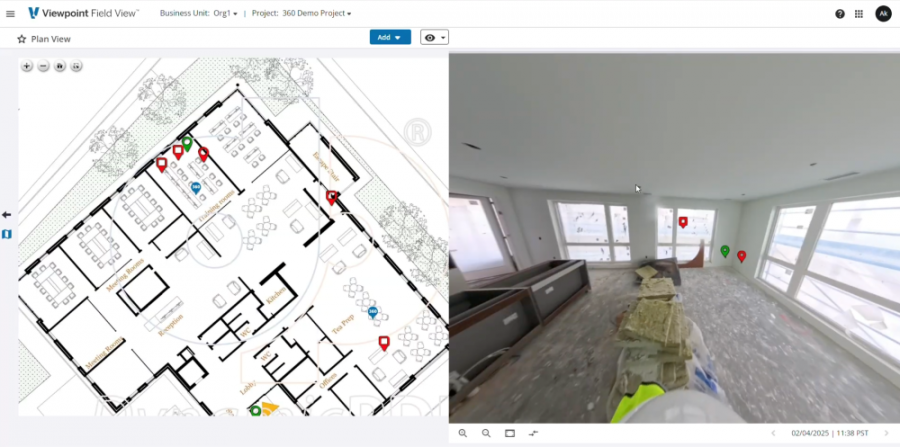
Connected digital systems can transform how landlords handle both reactive and preventative maintenance. Many contractors across the UK already use cloud-based field tools, like Trimble Field View, which allows teams to capture photographs, notes and timestamps directly on-site, even offline, syncing automatically once connected. This creates a transparent, time-stamped audit trail that can be reviewed and shared instantly.
In practice, when a tenant reports damp or mould, every stage - from first inspection through to sign-off - can be tracked in one place, complete with images and updates. This approach also supports better communication between tenants and landlords, allowing faster updates and helping to rebuild trust through visible accountability.
From compliance to confidence
Awaab’s Law may have been driven by tragedy, but its intent is to build a safer, more transparent housing system. Digital tools will make this possible, transforming compliance from a paper or disconnected system into a process of continuous assurance.
Ultimately, this isn’t just about meeting statutory deadlines - it’s about creating homes that are safe, healthy and demonstrably well-managed.
Find out more about Trimble Field View and how it can support Awaab’s Law compliance: https://cloud.pages.trimble.com/cms-vpt-field-view-3D-model-viewer