A radical and
wide-ranging set of measures to improve the competence of those who design,
construct, inspect, maintain and operate higher risk residential buildings
(HRRBs) and make them safer for the public has been set out today by a
cross-industries group backed by Government, the Industry Safety Steering Group
and Dame Judith Hackitt.
The measures are
being proposed by the Competence Steering Group (CSG), set up by the Industry
Response Group (IRG) to tackle competency failings identified in the Hackitt
Review, Building a Safer Future,
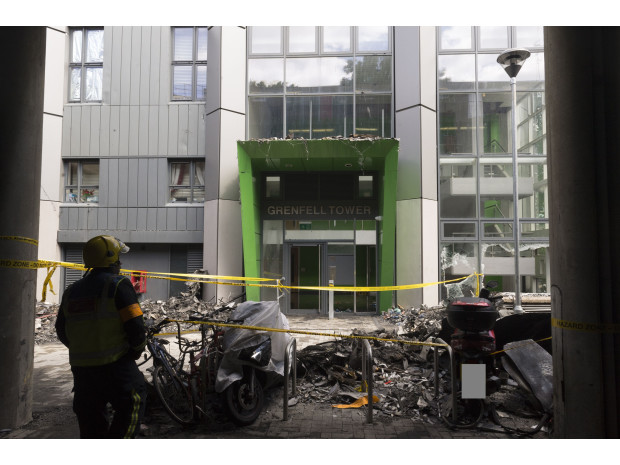
following the Grenfell Tower fire.
The CSG has brought
together more than 150 institutions and associations across the full spectrum
of construction, built environment, fire safety and building owner/manager
sectors; all working towards the common purpose of raising competences to
improve life safety.
In its interim
report Raising the Bar, published today,
the CSG is urging all life-safety-critical disciplines working on HRRBs,
including designers, engineers, building standards officers, site supervisors,
fire safety enforcement officers and fire risk officials, to adopt the
measures.
It is also calling
on Government to play its part by requiring that any company or individual
working on a central Government construction project, including those to
retrofit existing HRRBs must meet the competence frameworks set out within this
report. Local authorities and the wider public and private sectors
are also being urged to follow suit.
Dame Judith
Hackitt’s review identified a lack of consistency and rigour in the processes
and standards for assuring the skills, knowledge and behaviours of those
working on HRRBs and concluded this was a major flaw in the current regulatory
system. The competence frameworks developed by the CSG and its working groups
tackle these shortcomings by setting out the appropriate knowledge,
qualifications and skill sets required for individuals working on HRRBs, how
they should be assessed and by whom.
In addition, Raising the Bar calls for:
- A new oversight body - the
Building Safety Competence Committee - which will monitor assessment
processes, draw up a central register of dutyholders eligible to work on
HRRBs and continually drive improvements across the sector. This
recommendation dovetails with proposals set out by the Ministry of
Housing, Communities and Local Government in its recent consultation.
- Government to mandate
individuals working on HRRBs to be registered/certified by a recognised
professional/or certified body.
- All organisations, including
professional bodies, carrying out the assessments and reassessments of an
individual’s competence should themselves be subject to a rigorous system
of oversight by a body such as UKAS or the Engineering Council.
- The building safety regulator
to hold and maintain a register of those qualified to perform the key
roles with the advice of the Building Safety Competence Committee. And,
additionally, to provide sign-posting to registers which should be held by
the professional and trade bodies of those qualified and competent to work
on HRRBs.
- The period of reassessment to
be no less than every five years.
- Common principles of
continuing professional development (CPD) to be established for each
sector, which the Building Safety Competence Committee should use to hold
sectors to account.
- Fire safety CPD materials to
explain basic fire science to be available to anyone working on HRRBs or
managing occupied HRRBs.
In launching the
interim report, Graham Watts, chief executive of the Construction Industry
Council and chairman of the CSG, said: “It is clear that industry organisations
have accepted the need to change. The working groups are proposing to raise the
bar through a more rigorous approach, including training, assessment,
reassessment and third-party accreditation. Combined with a new oversight
layer, we think adopting our measures will result in a paradigm change to
improve competence and industry culture.”
The interim report
is published for wide consultation, ending on 18 October 2019, following which
a final report will be issued.