The Green
Infrastructure Design Challenge, a competition asking for ideas on
integrating biodiversity into the built environment, has been won by Green Roof
Shelters, presenting a simple, sustainable and immediately available concept.
Organised by CIBSE and UKCIP/ARCC, the GI Challenge is
in its third year, and this year’s entries presented dramatically different
approaches to the objective.
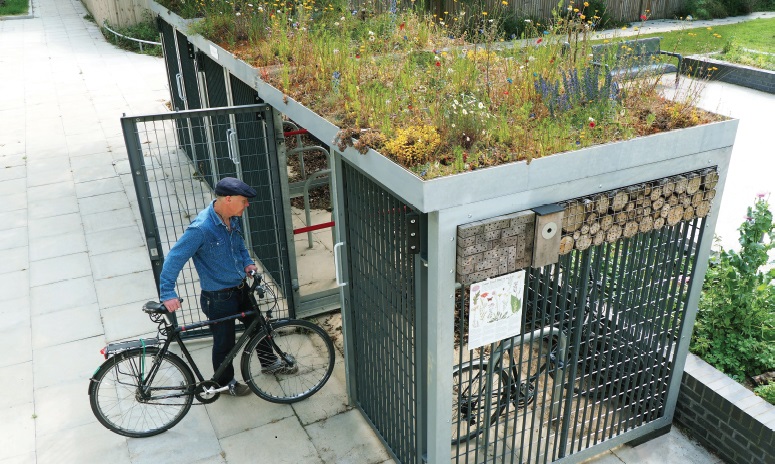
Green Roof Shelters is company that takes necessary
structures – such as bus stops, bin storage units or bike sheds – and turns
them into individual ecosystems. Vertical surfaces provide habitats for
insects and small mammals, with horizontal surfaces planted to provide pollen
and nectar. The green roofs can also be designed to trap water and develop into
mini-wetlands.
The genius of the
concept lies in its simplicity and immediate appeal. Introducing his concept,
John Little pointed out: “Communities need cycle and bus shelters. If you’re
going to use such structures, why not use them for more than one purpose?”
Awarding the trophy
and prize cheque, George Adams, Director of Engineering at SPIE and Chair of
the CIBSE Resilient Cities Special Interest Group, was keen to point out that
the final judge’s decision was made very hard by the wide variation in approaches
to the challenge.
Three other entries
were considered: architects Hawkins/Brown
was awarded a second prize for the design for the Urban Sciences Building at
Newcastle University – a triumph of integration between parkland and building,
blurring the distinction between interior and exterior and maximising the use
of vegetation throughout the facility.
Low energy building
designers RCZM took a South London School
and introduced the concept of Green Infrastructure not only into the design of
the campus but also into the curriculum, using the environment as a living
laboratory in which the children take on responsibility for maintaining the
biodiversity and understand the principles behind the project.
Building Engineers XCO2
imagined how an ideal urban environment would be created, considering the
challenge from both a neighbourhood and an individual building level,
emphasising the need for joined-up thinking to combine the impact of
well-designed urban parks, roads and waterways with multi-use buildings
maximising the use of space and creating living habitats for plants and
insects.