The recent Emerging Trends in Real Estate Europe joint report, published by the Urban Land Institute (ULI) and Pricewaterhouse Cooper (PwC), draws attention to the trend for investors to “continue to seek safe havens” in the commercial real estate sector.
But the survey of industry leaders across Europe found the move to ‘reactivate assets’ – refurbish good properties with ‘green’ credentials – is also taking hold. There is also the indication that sustainable properties are increasingly commanding higher rents and values.
SAS International Director, Andrew Jackson, comments that opting for products manufactured from durable materials, with both long life and end of life recyclability, are having an increasing significant impact in today’s market.
Metal products in particular can play a key role in ensuring sustainable fit outs, says Jackson, help reduce the overall energy and environmental impact of a project and deliver long term value.
“Steel and aluminium can be continuously recycled without any loss of value or properties,” states Jackson. “These products have a lifespan of more than 25 years while hold a residual value for clients. At the end of their life they can be recycled without any loss of properties.
“Once installed metal products offer an inert and inherently durable surface, and offer a hygienic and a low-maintenance option. Our on-going investment in manufacturing facilities and processes ensure we continue to provide value-engineered solutions across the built environment,” Jackson adds.
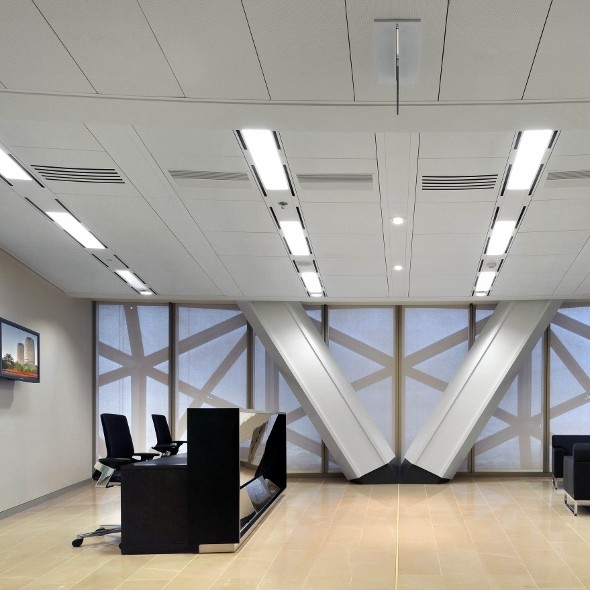
Acoustic Metal Ceilings manufactured by SAS International for example have a lifespan of more than 25 years and can count towards LEED and BREEAM environmental credits. SAS International is also the first ceiling manufacturer to produce ISO 14025 Environmental Product Declarations (EPDs) for its entire range of suspended ceiling systems to BS EN 15804.
The Report cites that interviewees expect government will force developers to make buildings ‘greener’ over the long-term through regulation and taxes.
It also identifies that investors and lenders are using sustainability as a tool to assess an asset’s potential. Both parties report sustainability as an increasing feature of due diligence.
But occupiers are demanding more too, and they don’t just want to reduce carbon footprints through building design. Investors also believe businesses - particularly in London – are seeking offices that enable them to offer greener environments. This could include incorporating bike parks that allow workers to cycle to the office, or landscaped green spaces, indicating renewed consideration of the urban realm and the communities around a building as another key trend for the year ahead.