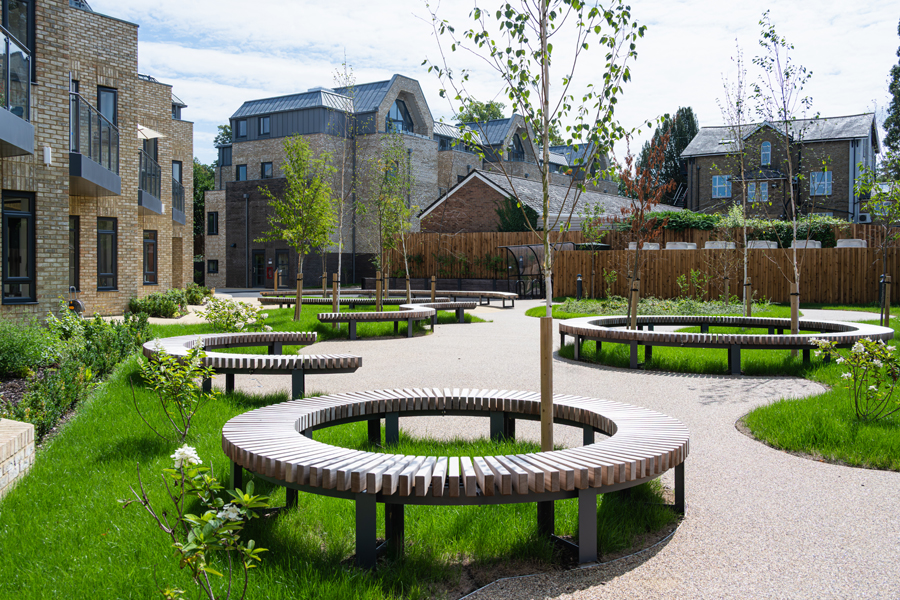
As active lifestyles and remote working redefine daily routines, demand for green spaces and parks is rising. People are staying longer, seeking increased opportunities for outdoor activities, and using public-realm infrastructure in new ways. Niall Walton, Client Relations Director at Hornbeck examines how changing habits are driving green space design, detailing how thoughtful seating, signage and play equipment can combat social isolation, enhance physical and mental wellbeing, and create accessible, welcoming spaces.
The Covid-19 pandemic and lockdowns heightened people’s desire to connect with nature. A 2022 Natural England survey found that nearly half of adults in England spent more time outdoors than before the pandemic. This keenness to spend more time outside has continued, with the 2026 Adults’ People and Nature Survey revealing around 70% of people in England visited green and natural spaces weekly.
Remote working practices, flexible daytime schedules and reduced commuting have also had an impact. Office for National Statistics research indicated people working from home are roughly 50% more likely to visit a local green space than those who commute. More than 75% of home workers leave their house for weekly exercise, compared to 52% of traditional commuters.
These changing habits place new demands on green spaces and parks. Visitors staying longer need somewhere comfortable to sit, a broader mix of users requires clear, accessible wayfinding, and more active lifestyles call for equipment that invites active play.
Reducing social isolation
With more people spending longer in parks, comfortable seating must be at the heart of modern landscape design.
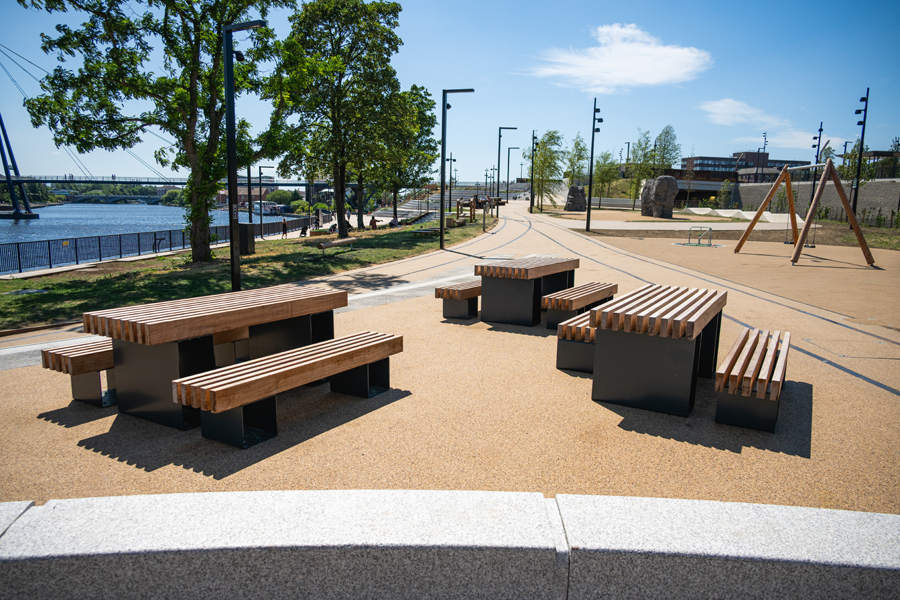
Material choice and construction can both significantly impact dwell time. Backed benches encourage people to sit for longer than backless designs, while timber’s low thermal conductivity prevents benches from being uncomfortably cold in winter. Unlike metal alternatives, it won’t get excessively hot in warmer summer temperatures, either.
Well-placed benches also act as free, accessible meeting spots that encourage social interaction. For older, lonely or marginalised people, this offers an opportunity to connect with others and feel more included.
Creating accessible green spaces
With a broader mix of visitors to parks, public gardens and green spaces, first-timers will likely need help finding their way.
Providing signage that details walking times or distances in high-contrast and large, clear type, at consistent intervals, and at heights readable for people in wheelchairs, will reduce cognitive load, improve spatial confidence, build trust, foster inclusion, and ensure safer, simpler orientation.
Increasing physical activity opportunities
Since the pandemic, green spaces have become popular family destinations. With physical activity and social interaction key for a child’s development, combining active exercise with the natural environment is now an important aspect of green space design.
Play equipment, such as climbing frames, swings and monkey bars, improves coordination and builds upper-body and lower-body strength and cardiovascular fitness. Time spent in fresh air, away from classrooms and screens, also helps to reduce anxiety and academic stress while improving cognitive function and emotional balance.
Two core green space design elements can be combined by placing benches close to the play area – enabling parents to sit and rest while watching their child’s activities.
More active lifestyles mean green spaces are becoming natural hubs for social interaction, physical activity and relaxation. As a result, landscape design must evolve with these demands, creating welcoming, comfortable environments that bring communities together and support physical and mental health.