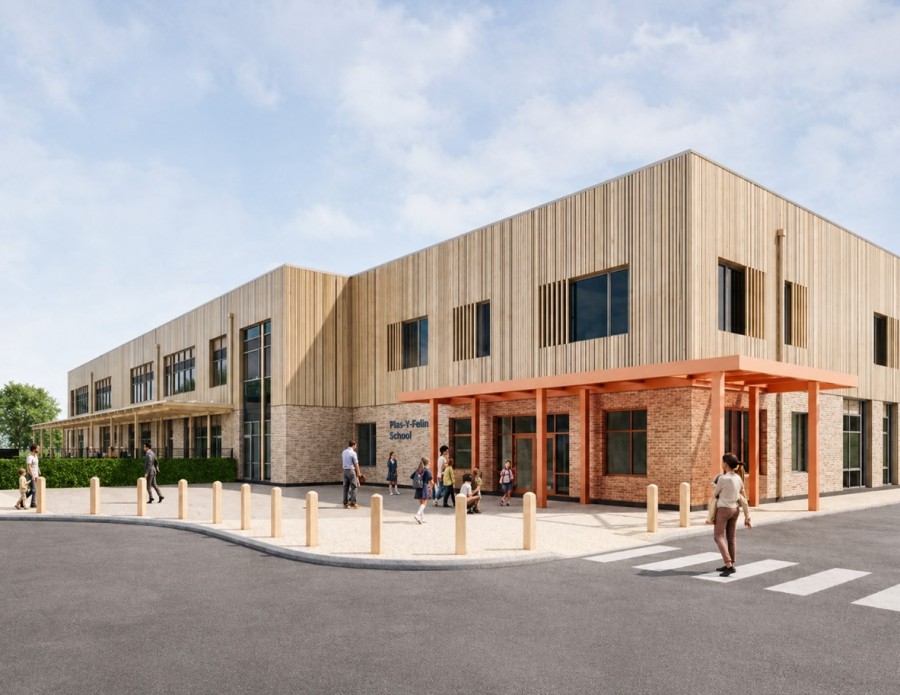
Turning Net Zero targets into high-performing buildings requires more than ambition. It demands the right combination of design, engineering, manufacturing and material innovation. At the new Plasyfelin Primary School in Caerphilly, Frameclad is putting its advanced ECO-LSF technology into practice on a landmark Net Zero school.
Being delivered by BAM Construction within the grounds of the existing school, the new facility will accommodate 420 pupils, alongside enhanced nursery and integrated childcare provision. Sporting facilities will also be available to pupils and the wider community, creating a multi-purpose education and community asset.
Plasyfelin Primary School – a flagship development
Work officially began in September 2025 on the £23 million replacement for Plasyfelin Primary – Caerphilly County Borough Council’s first Net Zero school - jointly funded by the council and Welsh Government through the Sustainable Communities for Learning Programme.
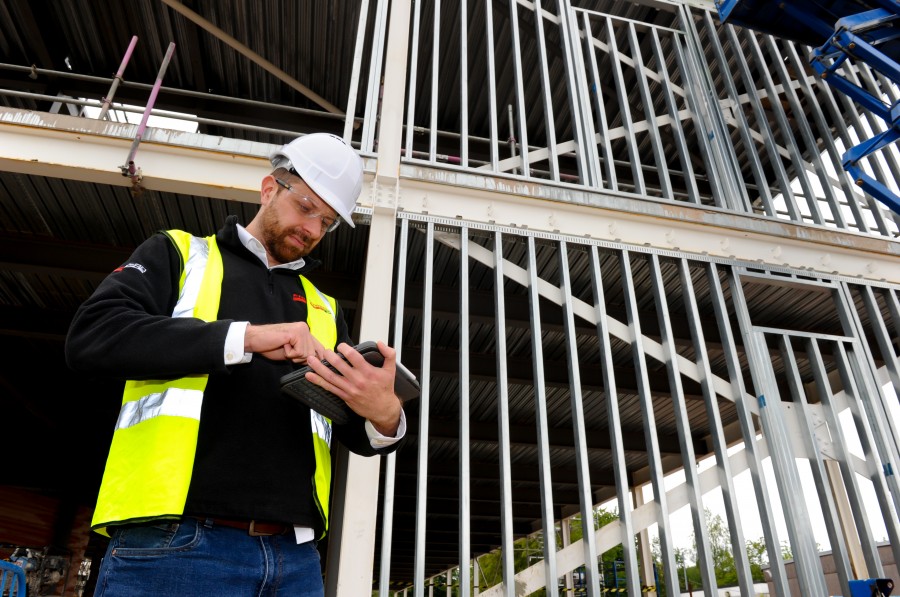
Appointed by BAM Construction, Frameclad designed, engineered and manufactured the ECO-LSF infill system for the project. Developed as a more environmentally sustainable alternative to conventional light steel framing, ECO-LSF is manufactured from 100% recycled steel using Electric Arc Furnace (EAF) technology powered by renewable energy.
Significantly lower carbon emissions
ECO-LSF can achieve up to 70% lower carbon emissions compared with traditional steelmaking processes. Importantly, however, the environmental credentials do not come at the expense of performance. ECO-LSF retains the strength, durability, safety and fire performance expected from a modern light steel frame system, demonstrating that lower-carbon construction does not have to mean compromising on technical requirements.
This is particularly relevant to public-sector projects such as Plasyfelin, where environmental ambition must sit alongside demanding requirements for safety, quality, programme certainty, reduced maintenance and enhanced long-term performance
.
ECO-LSF: a material bank for a circular future
Steel is a material bank, retaining its value through repeated cycles of recovery, reuse and recycling. ECO-LSF maximises this inherent circularity, using 100% recycled scrap steel to reduce reliance on virgin materials and move construction from ‘take, make, dispose’ approach to a circular model, reuse, recycle, repeat.
For Frameclad, it is also the next step in an established commitment to sustainability. Its conventional steel has historically contained around 60% recycled content, but the development of ECO-LSF was driven by the need to go further.
“After significant time and research, we are proud to give our clients an even more sustainable option,” says Nik Teagle, Joint Managing Director at Frameclad. “Taking it up another level and remaining competitive has taken time, but we are extremely proud that projects using ECO-LSF are now underway.”
ECO-LSF: the future of sustainable construction
For Frameclad, ECO-LSF represents more than a new product. It is a practical response to the changing demands of construction.
“We are proud to support the objectives of the DfE’s new Education Estates Strategy and its recent fundamental shift in how education buildings are designed, delivered and managed,” adds Martin Jamieson, Joint Managing Director, Frameclad. “The strategy is about much more than replacing ageing buildings – it is about creating resilient, sustainable and high-performing education spaces that deliver long-term value for pupils, communities and the public purse. Our ECO-LSF system demonstrates how innovation in construction can help turn those Net Zero ambitions into reality.
Construction Partners
- MAIN CONTRACTOR: BAM Construction
- PLANNING: The Urbanists
- DESIGN: Arcadis
- ENGINEERING: AECOM
- ECOLOGY: SLR
To read the full Plasyfelin Primary School case study, visit www.frameclad.com and head to projects.