Experts featured in the latest episode of MEDITE SMARTPLY’s Beyond the Board podcast share their views
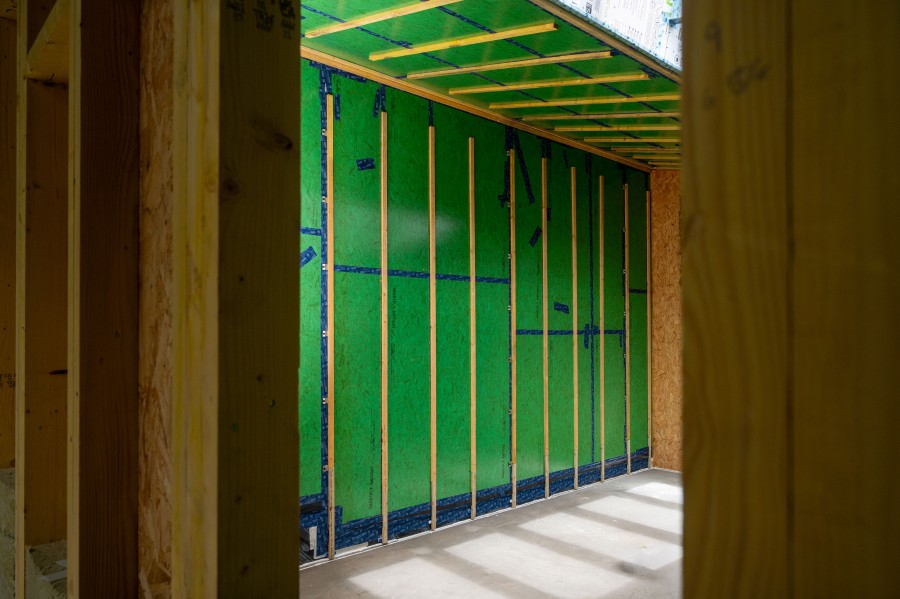
As the construction industry looks towards 2027, pressure to deliver more homes, improve building performance and efficiency and address persistent skills shortages is accelerating change across the sector.
In the latest episode of Beyond the Board, Roly Ward, Head of Business Development at MEDITE SMARTPLY, and David Murray, Head of Technical Affairs & Ireland Sales at MEDITE SMARTPLY, are joined by Michael Dennis, Timber Framer and qualified buildings Archaeologist, and Tabitha Binding, Development Associate at the Passivhaus Trust, to explore what traditional timber construction can teach the industry about building for the future.
Together, they identify five trends likely to shape the year ahead.
1. Timber construction will continue to gain momentum
David Murray, Head of Technical Affairs & Ireland Sales at MEDITE SMARTPLY, comments:
“When we ask ‘why timber?’ and ‘why now?’, I would love to believe the answer is driven entirely by sustainability, but the reality of the construction sector is that affordability plays a major role. Timber frame can support a more process-driven approach to construction and help deliver homes at greater speed and scale. Sustainability is clearly part of the conversation, but developers also need solutions that are commercially viable and make financial sense.
“We are already seeing significant growth in timber frame construction. In Ireland, for example, timber frame grew by 12% between 2021 and 2025. With major housing shortages in both the UK and Ireland, the commercial case for timber frame is becoming increasingly important.”
2. Building performance will start with better design
Tabitha Binding, Development Associate at the Passivhaus Trust, comments:
“Timber is a great material and, as we know from historic buildings, it can last for centuries. However, some modern building practices and architectural features, such as flat roofs, internal gutters and parapets, can create challenges. If we go back to the basic principles of keeping water off the roof and timber away from the ground, timber can be an extremely effective material for low- and medium-rise buildings.
“The focus therefore needs to be on how a building is designed and built. That is what led me to the Passive House standard in 2015. Having delivered a 70-square-metre, all-Welsh timber house to full Building Regulations in 12 weeks, I wanted to understand how we could do it better.
“Studying Passive House reinforced for me just how important building physics is. The standard allows you to model how a building should perform on paper and then verify that performance through delivery on site and third-party certification. That quality assurance helps ensure the building is low energy, comfortable and healthy for its occupants, while also protecting the timber and other materials within the structure.
“To me, that is the golden thread: ensuring that the products and materials are specified and installed in the right place, and that the finished building performs as intended.”
3. Longevity will return to the centre of the sustainability debate
Michael Dennis, timber framer and qualified building archaeologist, comments:
“Historic timber buildings give us a very different perspective on longevity, reusability and the afterlife of a structure. We can look at buildings that have already survived for hundreds of years and understand why they have lasted, how they respond to their local environment and how they can be repaired when something goes wrong.
“When thinking about these buildings, we also need to consider whether they have been designed around their local environment, local materials and local conditions, including factors such as seismic activity in earthquake-prone areas. We also need to design for less-than-perfect conditions. Climate is becoming more extreme, and buildings may go through periods of neglect or limited maintenance. A genuinely durable building should be capable of coping with that and, when damage does occur, allow individual elements to be repaired rather than requiring full replacement.”
4. The skills shortage will drive changes in how we build
Roly Ward, Head of Business Development at MEDITE SMARTPLY, comments:
“We have not properly addressed construction’s skills challenge for around 30 years, and Brexit further reduced the number of people working in the sector. The scale of the challenge is clear from research we conducted with the Structural Timber Association: 73% of timber frame manufacturers reported skilled labour shortages, alongside concerns about the availability of apprenticeships, local training pathways and the appeal of construction careers to younger people. This presents a serious challenge as demand for housing continues to grow.
“I regularly take part in events with organisations such as CITB and the Institute of Carpenters, speaking to hundreds of multi-skilled students, including at NSCG Stafford College, about how we sustainably manufacture engineered timber panels and bring innovation to the construction market. It is encouraging to see young people coming through colleges, but there is still a significant gap between education and employment.
“One of the challenges is ensuring employers are equipped to take on apprentices. It requires time, resources, investment and long-term commitment, so businesses need appropriate support and incentives. At the same time, we need to show young people that construction offers attractive, well-paid careers with genuine opportunities for progression if we want to build the workforce the industry will need in the years ahead.”
5. Homeowners will become more informed and influential
David Murray comments:
“I speak to a lot of architects, and they are telling me that clients are coming to them much better informed and more widely read about how they want their homes to be built. There is now a huge amount of high-quality technical information available, which means homeowners can enter the process with a much clearer understanding of materials, building systems and performance.
“For self-builders in particular, that knowledge can influence everything from the materials they choose to energy performance, safety and how the home will work for their family over the long term.”
To learn more, tune in to “Back to the Future: When Traditional Timber Building Meets Modern Methods of Construction”, the second episode of Beyond the Board, a podcast-style video series powered by SMARTPLY and hosted by Roly Ward and David Murray of MEDITE SMARTPLY.
Watch and listen to this episode on YouTube: https://youtu.be/gXenB0NpVDo or Spotify: https://open.spotify.com/episode/396tlLj7oWJnet1AoSJepF?si=EtUafhbWQR6OsIIsgiPVyQ.