The UK construction industry is facing a prolonged period of difficult trading conditions, with output now expected to fall by 4% in 2026 before recovering by just 0.4% in 2027, according to the Construction Products Association’s (CPA) latest forecast.
The CPA’s Autumn 2026 Construction Industry Forecasts, covering the period to 2028, paint a challenging picture for the sector, with rising construction costs, higher borrowing rates and continued economic uncertainty weighing heavily on housebuilding and home improvement activity.
The latest figures represent a further downgrade from the CPA’s Summer forecasts, which predicted a 3.3% fall in construction output this year followed by growth of 1.2% in 2027. A more meaningful recovery is now not expected until 2028, when output is projected to increase by 2.9%.
For businesses across the timber supply chain, both the private housebuilding and housing repair, maintenance and improvement (RM&I) sectors, two major sources of demand for timber products, are expected to experience further decline over the next 18 months.
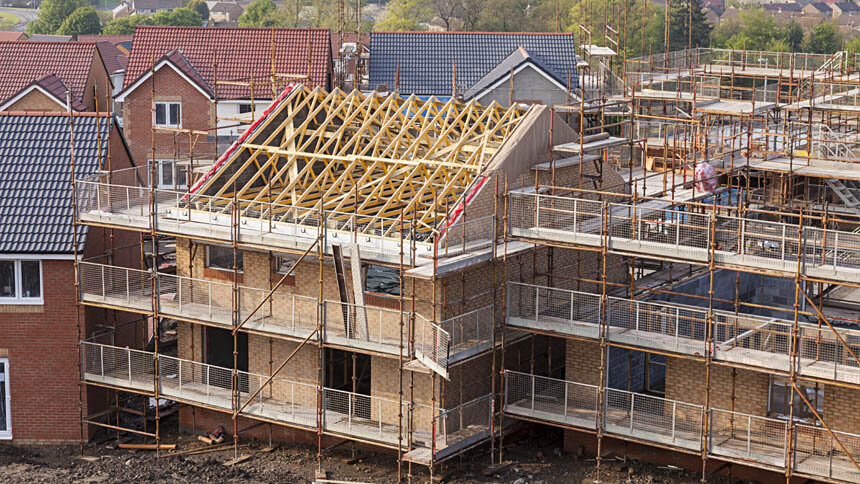
Private housing, the construction industry’s largest sector, is forecast to contract by 10% in 2026, followed by a further 3% decline in 2027. Growth of 4% is not expected until 2028. The CPA has identified affordability and development viability as the principal challenges facing housebuilders, with higher mortgage rates and weakening buyer confidence adding further pressure.
While larger housebuilders have continued working on projects supported by earlier sales, the impact of declining mortgage approvals and sales rates is expected to become increasingly apparent during the second half of 2026 and the first half of 2027. Smaller housebuilders have been particularly affected, with affordability pressures and difficulties making new developments financially viable restricting activity.
There are some potential positive developments, including the Government’s proposed ‘Your First Home’ equity loan scheme, which is designed to support first-time buyers. The CPA suggests this could stimulate demand once the details and implementation timetable of the scheme are confirmed.
Public housing construction is also forecast to decline by 5% in 2026, before returning to growth of 2% in 2027 and 6% in 2028.
Home improvement market faces further contraction
The outlook for private housing RM&I is equally difficult, with output forecast to fall by 8% this year and a further 2% in 2027. This represents a downgrade from the CPA’s Summer forecast, which anticipated that activity would stabilise next year.
According to the CPA, households are increasingly prioritising day-to-day spending and savings over discretionary home improvements, as higher energy bills, inflation and borrowing costs continue to put pressure on household finances. Feedback from the construction supply chain suggests activity was particularly subdued during July and August, with only a seasonal improvement in September.
Basic repairs and maintenance have remained relatively consistent, while energy efficiency improvements, including solar photovoltaic installations and heat pumps, continue to provide stronger areas of demand.
For timber merchants, manufacturers and suppliers, the continued weakness in both new housing and home improvement activity points to another difficult year for businesses heavily reliant on the domestic residential market.
Infrastructure offers some opportunities
There are more positive signs elsewhere in construction, particularly in the infrastructure sector, where output is forecast to rise by 2.5% in 2026 and 2.9% in 2027, followed by growth of 3.5% in 2028. Investment in energy generation, electricity distribution and water infrastructure is helping to offset weaker activity in roads and rail.
Industrial construction is expected to fall by 6.7% in 2026 before recovering by 3.5% in 2027, with data centre development providing a significant source of new activity.
Commercial construction is forecast to decline by 5.9% this year before growing by just 0.5% in 2027. While major new developments continue to face viability challenges, demand for high-quality office refurbishment and fit-out projects remains relatively strong.
Economic uncertainty affects confidence
In its report, the CPA attributes much of the deterioration in its forecasts to the ongoing effects of conflict in the Middle East, particularly around rising oil and energy prices. These pressures are expected to keep inflation and interest rates higher for longer, reducing consumer confidence and increasing the cost of financing construction projects.
The report also highlights continuing concerns over construction industry insolvencies. According to Insolvency Service figures cited by the CPA, 3,866 construction businesses entered insolvency in the 12 months to August 2026, with further increases anticipated over the next 12 to 18 months.
Longer-term skills shortages remain another concern. UK construction employment stood at 2.07 million in the second quarter of 2026, 14.5% below its peak in early 2019. The CPA warns that shortages of skilled workers could become a major constraint when construction activity eventually recovers.
For timber manufacturers, importers, merchants and other businesses supplying the construction sector, the latest forecasts suggest that trading conditions are unlikely to improve significantly in the near term. The anticipated contraction in private housebuilding and home improvement activity is particularly significant, given the importance of these markets to demand for structural timber, engineered wood products, joinery, sheet materials and other timber-based construction products.
Although some growth is expected to return in 2028, the CPA’s figures suggest that recovery will be gradual rather than immediate.
The forecasts also highlight the uneven nature of construction activity, with opportunities in selected infrastructure, refurbishment and industrial markets contrasting with continued weakness in residential construction.
For businesses throughout the timber supply chain, the outlook reinforces the need for careful planning, close monitoring of customer demand and a continued focus on managing costs and cashflow while preparing for an eventual recovery.
The CPA’s Autumn forecasts project that total construction output will reach approximately £219.7 billion in 2028, measured in constant 2023 prices, compared with £221.5 billion in 2025. This means that, even with the anticipated improvement in 2028, overall construction activity would remain below its 2025 level.