The Landscape Institute (LI) welcomes a stronger role for nature and design in today’s revised National Planning Policy Framework (NPPF).
However, the LI warns that weakened protection for the country’s valued landscapes risks undermining the government’s own ‘good’ growth aims.
The LI is the chartered body for landscape architects and the leading voice for the profession that designs and manages the places where people live, work and spend time outdoors.
The NPPF sets the rules for how England plans, builds and grows. Today’s announcement confirms a presumption in favour of development in sustainable locations, a default ‘yes’ for new homes near well-connected stations, and reforms that reduce the sign-off that councils need from statutory consultees before granting permission.
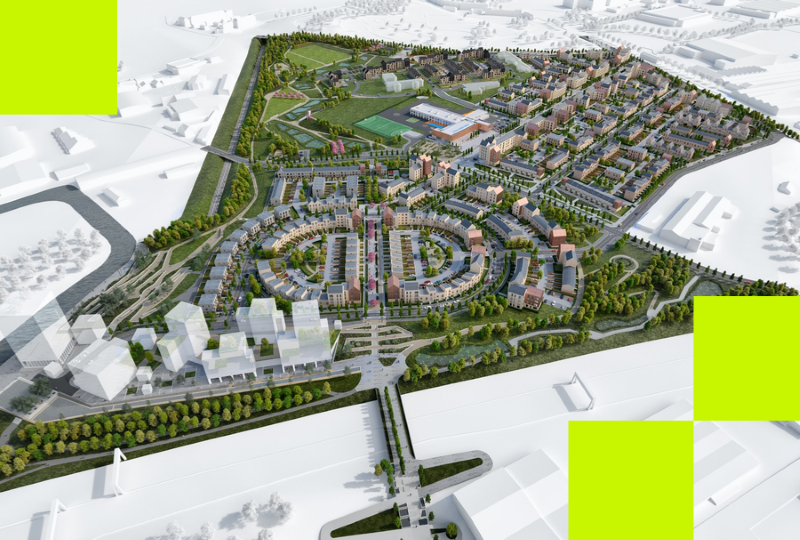
Image: Sighthill Transformational Regeneration Area Play - LDA Design + Christopher Swan Photography.
Saira Ali, President of the Landscape Institute, said: “Good planning starts with the land and natural systems. We welcome this Framework where it asks planners to put landscape and nature at the heart of design. But more is needed to build climate resilience, healthy communities and thriving nature into our places. The Landscape Institute looks forward to working with local authorities, new Strategic Authorities and Mayors and developers to use landscape-led approaches to deliver for people, place and nature.”
The Framework has moved some way towards treating landscape as critical infrastructure. For example, the revised NPPF has:
- Reinstated the strong presumption against major development in Protected Landscapes, restoring the wording “should be refused” (in place of the weaker “should only be supported if”) and retained a two-part test for development. This follows direct pressure from the LI and partner bodies during consultation.
- Closer alignment with Local Nature Recovery Strategies, giving nature recovery the emphasis it needs. The 10% biodiversity net gain minimum stays as the statutory floor.
- A clearer emphasis on design codes and design review, helping places grow for the benefit of communities.
- Reintroduced Spatial Development Strategies, giving areas a strategic, long-term framework for growth and green infrastructure, now confirmed with a longer minimum plan period (25 years) and a more measured review cycle.
- Made it easier to build new homes near stations making sustainable transport easier. However, these must bring green and blue infrastructure with them. The government has clarified what counts as a “well-connected” station but not committed to matching green infrastructure requirements.
The LI has concerns about how well England’s landscapes will be protected as the country builds. For example, the revised NPPF has:
- Weaker protection for National Parks and National Landscapes: the government has kept “substantial weight” rather than restoring “great weight”.
- Not reinstated the term “valued landscapes”. This leaves much-loved but undesignated countryside without a route to recognition.
Overall, the NPPF does not take full advantage of what a landscape-led approach to development offers – a chance to build places that work for existing and new communities, support people’s health, restore nature and are resilient to climate change. The Landscape Institute will continue to work with Government, local authorities and developers to make development work for people, place and nature.