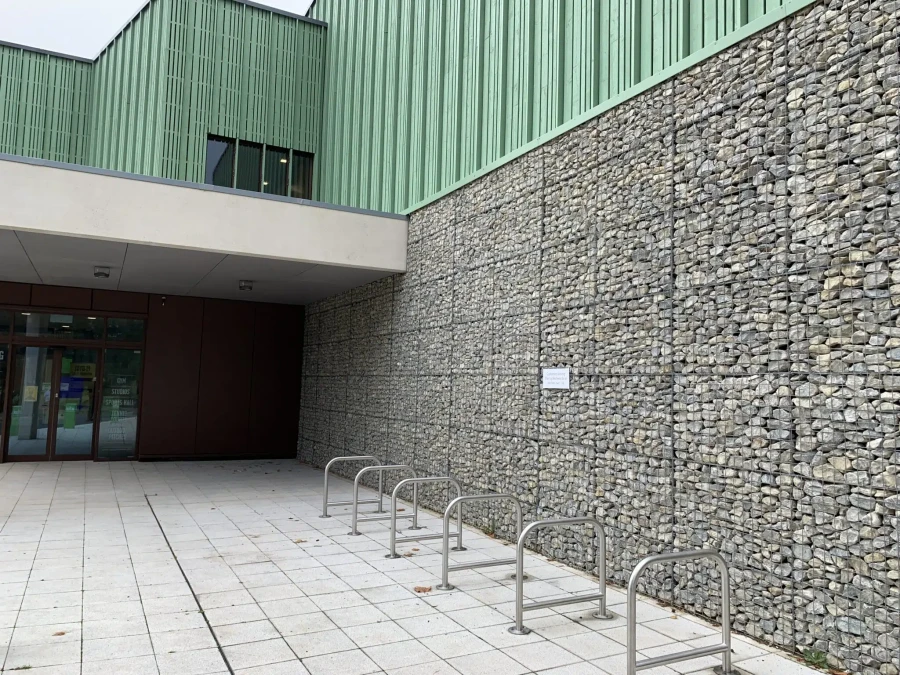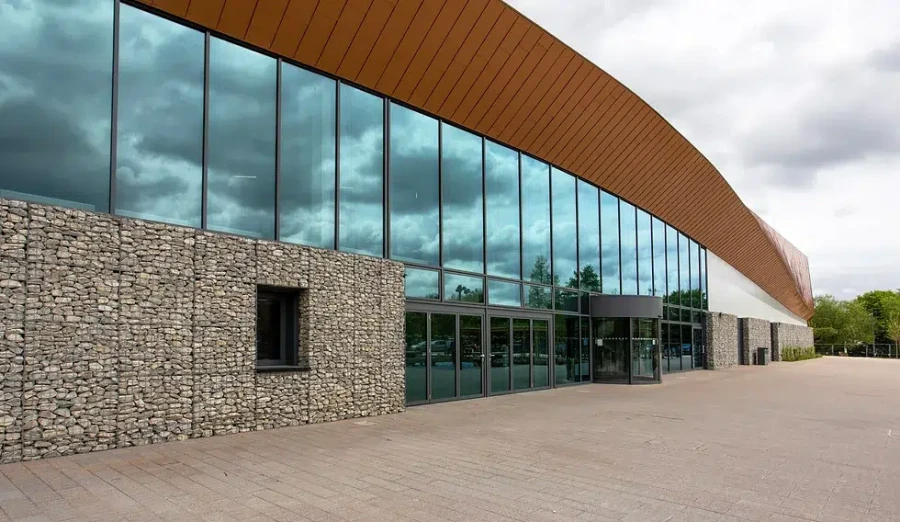
When choosing materials for public sector architecture, local authorities and architects face many demands. Public buildings, including schools and leisure facilities, must deliver durability, fire safety compliance, low maintenance, and environmental value, all while operating under tight budgets.
While traditional solutions like timber or rendered facades have long been used, gabion cladding is emerging as a practical alternative for the public sector. Here’s why;
Durability and Anti-Vandalism
Public infrastructure endures high levels of foot traffic. Conventional lightweight panels can suffer impact damage, cracking, or graffiti, resulting in recurring maintenance costs for local councils.
Gabion cladding addresses these issues. Zinc alloy-coated steel mesh filled with natural stone creates a solid layer of protection for the building. The uneven surface of gabion stone acts as a natural graffiti deterrent, making spray paint application difficult while eliminating the need for expensive chemical coatings.
Fire Safety and Regulatory Compliance
Following updates to UK building regulations, non-combustibility in external wall construction remains essential for high-occupancy public sector developments.
Unlike organic or composite materials, stone-filled gabion systems are Class A1 non-combustible. When anchored via engineered subframes, gabions provide a fire-safe building envelope that aligns with modern building control standards.
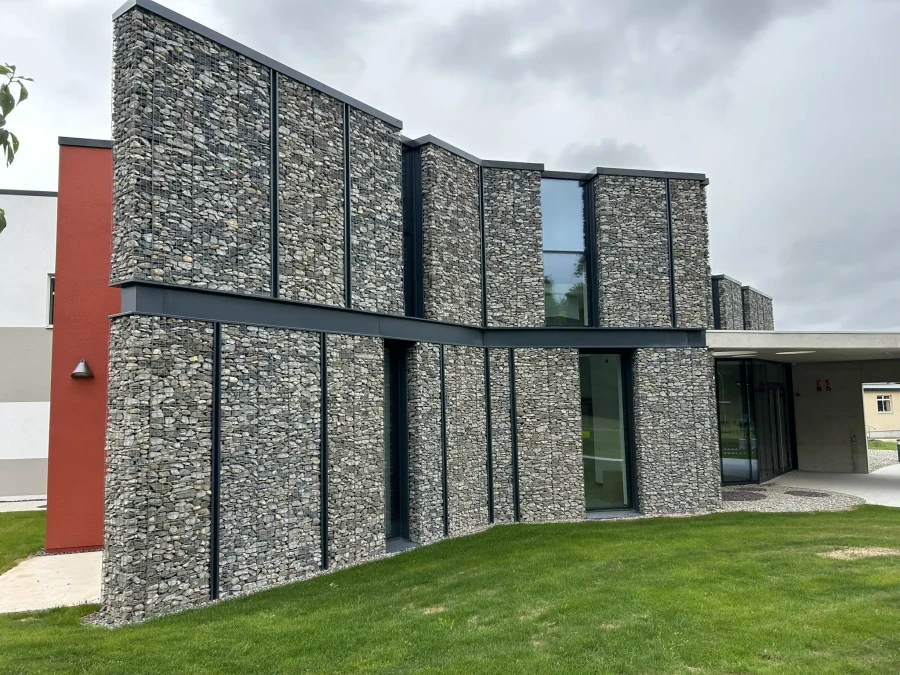
Real World Applications in Public Design
Several UK public sector projects show how gabion cladding performs in practice.
At the Lee Valley Ice Centre, a regional sports facility, the design required a facade that integrated a community hub into surrounding parkland. The gabion cladding allowed the structure to soften its visual presence against the greenery. The stone fill provided thermal mass, helping to buffer temperature changes between the indoor rink and exterior climate.
At the NASRIC facility, gabion cladding was used with locally sourced aggregates, significantly reducing the cost of the stone fill. It also reduced the carbon footprint of the construction, getting a BREEAM accreditation for responsible material sourcing.
At Gunnersbury Park Sports Hub, the challenge was creating a sports venue in a historic parkland. Gabion cladding provided a finish that echoed the natural geology of the area.
Acoustic and Environmental Performance
Beyond physical protection, gabion facades offer acoustic and environmental benefits. Research published by the Royal Institute of British Architects (RIBA) shows that acoustic comfort in public spaces plays a key role in user well-being. The porous nature of gabion stone breaks up sound waves, dampening external urban noise around schools and libraries.
Additionally, guidelines from the UK Green Building Council (UKGBC) highlight the importance of end-of-life recyclability. Because gabions rely on mechanical assembly, the steel mesh and stone fill can be separated and recycled at the end of the building lifecycle.