Paul Trace from Stella Rooflight Discusses Why Material Choice Matters in Conservation Rooflights
Conservation rooflights are often judged on aesthetics first. Sightlines, glazing bars, flush detailing and planning compliance understandably dominate the specification conversation, particularly within listed buildings and sensitive heritage settings. Yet beneath the visual detailing lies a far more important consideration that is still too often overlooked within the industry: what is the rooflight actually made from?
It is a surprisingly important question. Specifying a conservation rooflight without understanding the material behind it is a little like buying what appears to be a premium mechanical watch without asking what lies beneath the polished finish. Two products may look remarkably similar in a showroom, brochure or online image, yet the difference between solid stainless steel construction and lower-grade plated materials only becomes apparent over time. One develops character, longevity and trustworthiness. The other gradually deteriorates as the underlying compromises begin to reveal themselves.
The same principle applies to conservation rooflights. Two products may appear visually comparable on day one, yet perform very differently over the course of ten or twenty years exposed to rain, condensation, pollution, thermal movement and the uniquely demanding conditions found within the British climate. In many cases, the deciding factor is not styling, but material quality, manufacturing standards and the integrity of the steel itself.
At Stella Rooflight, every rooflight is manufactured using 316L stainless steel. That decision is not driven by marketing terminology or specification fashion. It is rooted in long-term performance, durability and the belief that conservation projects deserve materials capable of lasting generations rather than merely surviving a warranty period. However, within the wider rooflight market, steel specification varies enormously. Some products use mild steel or carbon steel protected by coatings or powder finishes, while others utilise 304 stainless steel, a material commonly found within kitchen appliances, sinks and cutlery. Although technically classified as stainless steel, not all stainless steels are created equal, particularly when subjected to the harsh realities of external roofing applications.
Mild steel has long been valued for its affordability and ease of fabrication, but it remains fundamentally vulnerable to corrosion. In rooflight manufacturing, this typically creates a dependency on protective coatings remaining intact indefinitely. Unfortunately, rooflights occupy one of the most demanding environments possible for any manufactured product. Constant exposure to UV light, moisture, airborne contaminants, standing water and repeated thermal expansion gradually tests even the best protective systems. Once coatings become compromised, corrosion begins. On an agricultural gate or industrial bracket this may be considered acceptable maintenance. On a conservation rooflight installed within a listed building or architecturally sensitive project, it can become a very different conversation entirely.
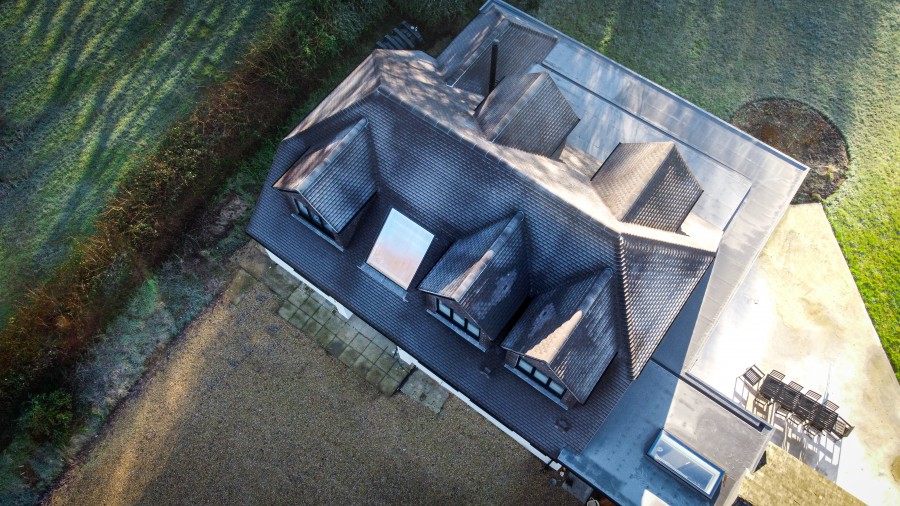
The use of 304 stainless steel presents a more nuanced issue. It is, without question, a legitimate engineering material and perfectly suitable for countless applications. However, external rooflights place far greater long-term demands on steel than a commercial kitchen or household appliance. Compared with 316L stainless steel, 304 offers lower resistance to chlorides, airborne pollutants and environmental corrosion, particularly in coastal or exposed locations. Over time, staining, pitting and corrosion can emerge, especially where moisture sits within joints or detailing. To many homeowners and even some specifiers, the term “stainless steel” understandably creates an assumption of permanence, yet the reality is considerably more complex.
By contrast, 316L stainless steel, often referred to as marine-grade stainless steel, was specifically developed for more demanding environments. The addition of molybdenum significantly improves corrosion resistance, while the lower carbon content associated with the “L” designation improves weld integrity and reduces the risk of corrosion around fabricated joints. In practical terms, this results in a material far better suited to the realities of long-term roof exposure. It is stronger, more stable and considerably more resilient over time. It also allows for slimmer and more refined sections, an important advantage within conservation architecture where subtlety often matters more than visual statement. The best conservation rooflights are frequently the ones that appear most visually comfortable within the roof plane, rather than those demanding attention through oversized frames or heavy detailing.
Of course, premium materials come at a cost. Genuine 316L stainless steel is expensive, and manufacturing specialist rooflights within the UK using high-grade materials, skilled fabrication and rigorous quality control is not a low-cost exercise. This is precisely why specifiers and homeowners should approach unusually low price points with caution. If a product is marketed as a premium conservation rooflight at a price that appears surprisingly affordable, it is entirely reasonable to ask difficult questions about material specification, manufacturing origin and supply chain transparency. What grade of steel is actually being used? Where was it produced? Was the product fully manufactured in the UK, or simply assembled here? These are not cynical questions. They are sensible ones.
The distinction between “Made in Britain” and “Assembled in Britain” has become increasingly blurred across many sectors, including construction manufacturing. Some products are marketed heavily around British heritage, craftsmanship and local manufacturing despite substantial portions of the fabrication process taking place overseas, often within regions where labour and production costs are dramatically lower. Legally, such claims may satisfy manufacturing definitions, yet the reality behind them can differ significantly from the impression presented to specifiers and consumers.
There is also an uncomfortable contradiction emerging within parts of the wider construction supply chain. Considerable emphasis is frequently placed on environmental messaging, sustainability initiatives and carbon credentials, all of which may be entirely legitimate in isolation, while far less attention is sometimes given to the realities of global manufacturing logistics, imported components and long-distance supply chains. For architects and specifiers genuinely attempting to support local manufacturing, material traceability and long-term product integrity, those distinctions matter enormously. Sustainability is not simply a question of marketing language or purchased credentials. It is equally about provenance, accountability and understanding where and how products are actually made.
This is particularly important because the quality of steel itself can vary significantly depending on its source and production standards. European steel manufacturing is generally subject to exceptionally rigorous quality control, certification processes and traceability requirements. That does not mean overseas steel production is inherently poor, nor should the discussion descend into simplistic assumptions about geography alone. However, variations in tolerances, consistency and quality assurance can be substantially greater where manufacturing standards are less tightly controlled or where commercial pressures prioritise cost reduction above long-term performance.
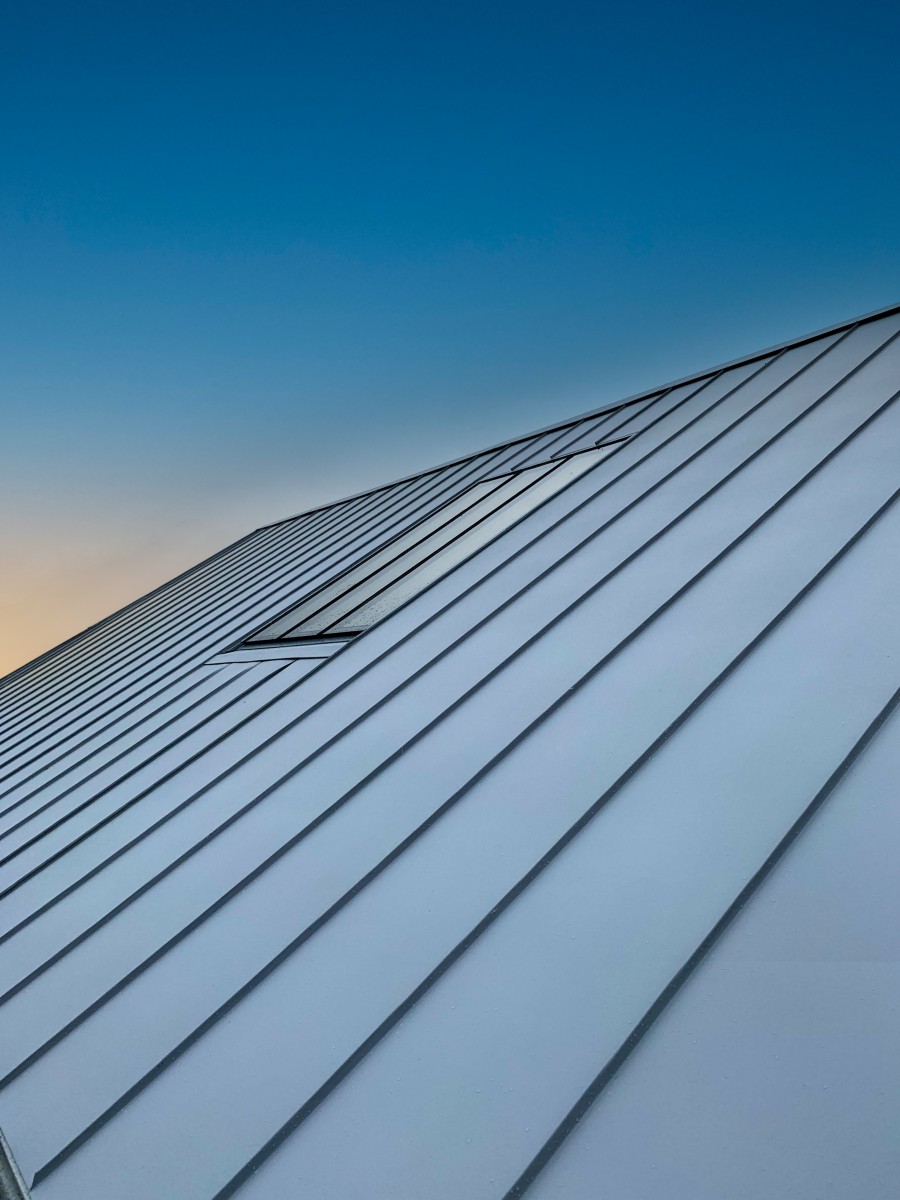
Other industries understand this principle instinctively. Aerospace manufacturers do not substitute structural alloys because they are “close enough”. Premium automotive engineering companies obsess over corrosion protection, tolerances and material consistency because experience has taught them precisely what happens when shortcuts are taken. Even within watchmaking, metallurgy is treated with extraordinary seriousness because microscopic variations in material quality ultimately determine durability, precision and longevity. No matter how trivial the component may appear in isolation, the integrity of the final product depends upon the quality of every individual part and every stage of the manufacturing process.
And yet, within parts of the conservation rooflight sector, material specification can still receive surprisingly little scrutiny. Planning departments and conservation officers quite rightly devote considerable attention to glazing bar proportions, heritage appearance and sightlines, but the actual manufacturing quality and provenance behind those products can sometimes remain largely invisible. A rooflight may successfully imitate the appearance of heritage detailing while being manufactured using materials and processes that bear little resemblance to the standards traditionally associated with British craftsmanship and engineering.
None of this is intended to suggest that lower-cost products do not have a place within the market. They undoubtedly do. However, there is an important difference between openly value-engineered products and premium products marketed through carefully curated narratives that imply a level of material quality or manufacturing provenance that may not entirely reflect reality. Specifiers and homeowners deserve clarity regarding the compromises that exist within any manufacturing process because, ultimately, the laws of economics remain stubbornly difficult to ignore. Genuine 316L stainless steel conservation rooflights manufactured to high standards within the UK simply cannot be produced at bargain-basement prices.
Perhaps that is the central point. Great conservation rooflights are not expensive by accident. They are expensive because of the materials, engineering, craftsmanship and manufacturing standards required to produce them properly. In an age increasingly dominated by marketing narratives, sustainability claims and carefully managed branding, perhaps the most valuable thing the industry can return to is simple transparency. Because long after brochures have been recycled and websites redesigned, the quality of the material itself remains quietly visible within the roofscape for decades to come.
To find out more about Stella Rooflights and what sets our conservation rooflights apart visit www.stellarooflight.co.uk email info@stellarooflight.co.uk or call us on 01794 745445.