Jason Tatton, technical service manager at the UK’s leading manufacturer of subfloor preparation products and flooring adhesives, F. Ball and Co. Ltd., advises on guarding against floor failure as a result of excess subfloor moisture, including gauging the need for a moisture management solution.
Unchecked excess subfloor moisture, whether residual construction moisture, rising damp, or as a result of flooding, can attack adhesives and floorcoverings, causing carpet underlays to rot, wooden floors to warp, and resilient floorcoverings to blister, ruining the finished appearance of an installation and potentially leading to total floor failure. It continues to be the leading cause of floor failure, resulting in major inconvenience and remedial work. To prevent this, it is important to determine subfloor moisture levels before a floorcovering installation takes place, and an appropriate moisture management solution should be deployed where necessary.
Moisture test
Where Relative Humidity (RH) levels in the subfloor exceed 75% (65% if wood floorcoverings are to be installed), a moisture management solution will be required to prevent excess subfloor moisture potentially causing floor failure. For this reason, it is recommended that a moisture test is undertaken as part of any flooring installation, having first ensured the subfloor is suitably smooth, sound and free of contaminants.
A quick, non-intrusive way to identify the presence of subfloor moisture is to use a handheld radio frequency moisture meter. If the device indicates the presence of moisture in the subfloor, further testing will be required to determine subfloor relative humidity levels and the requirement for a moisture management solution.
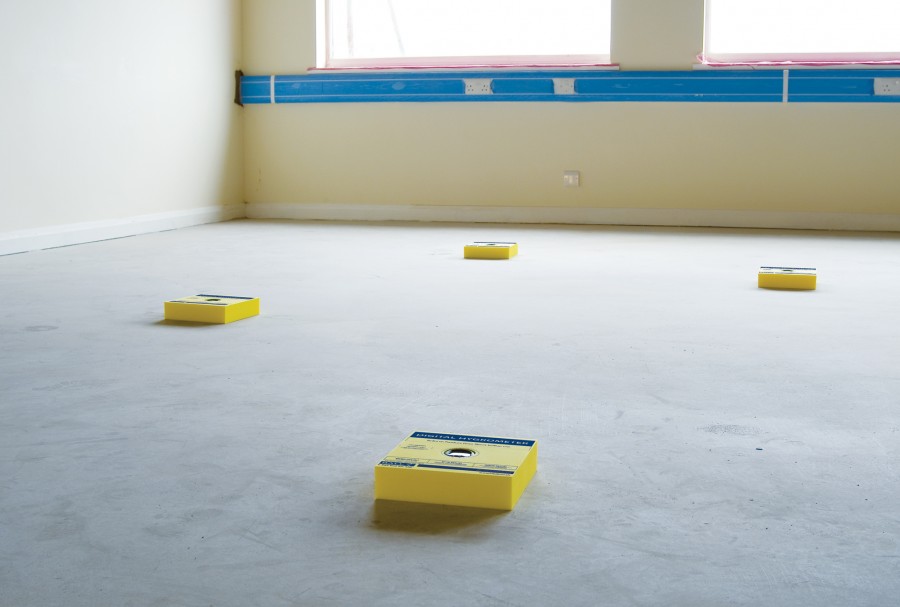
The only method of measuring subfloor relative humidity levels with certainty, as advocated by British Standards, is to use a calibrated digital hygrometer. Affixed to the subfloor using butyl tape to create an airtight seal around the base of the instrument, these devices measure the relative humidity of a small volume of confined air in equilibrium with the subfloor.
Waterproof surface membranes
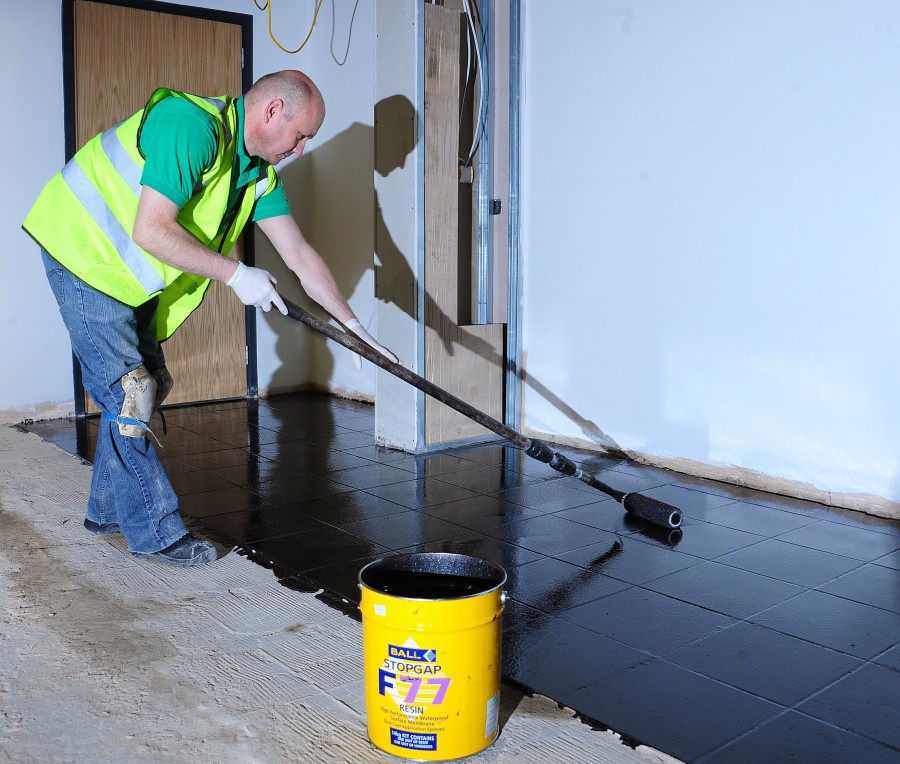
The usual solution for effectively controlling damp is the application of a liquid waterproof surface membrane. Advanced products are now available that will isolate excess subfloor moisture where RH values are up to 98%, with a single coat application, and fully cure in as little as three hours.
F. Ball’s Stopgap F78 provides an even quicker, two-coat system. The first coat dries in 15-30 minutes, and a further 30 minutes drying time is required for the second coat to create an effective barrier against residual construction moisture where RH values are up to 95%.
Next steps
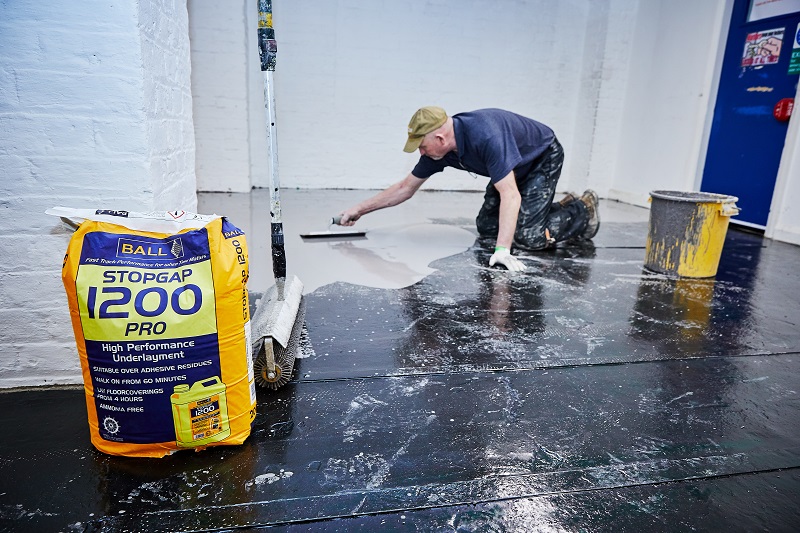
Once a suitable moisture management solution is in place, the preparation of the subfloor for the installation of new floorcoverings can commence, this should include the application of a smoothing compound to create a perfectly smooth base for the receipt of floorcoverings. When using Stopgap F78, you don’t need to prime the surface prior to the application of a smoothing compound, saving further time and expense.