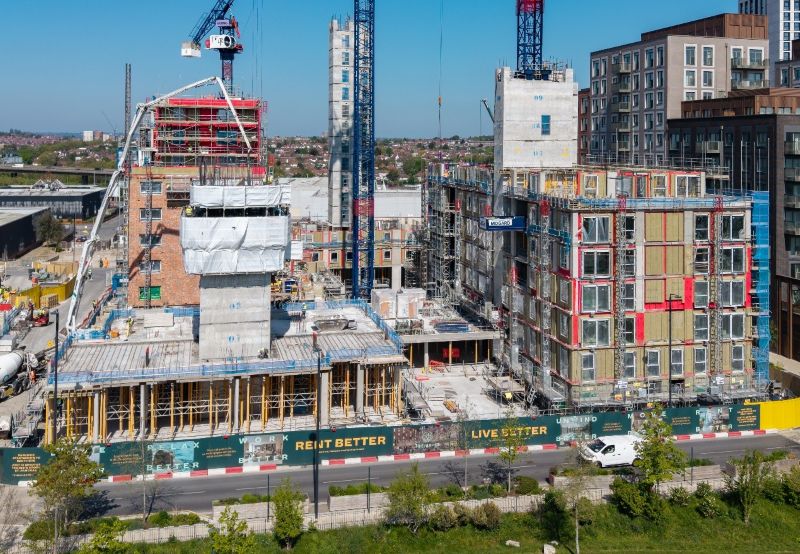
In a UK-first, Brent Cross Town - Related Argent 180-acre new neighbourhood in North London - has become the first development to successfully use calcined clay concrete in a residential building.
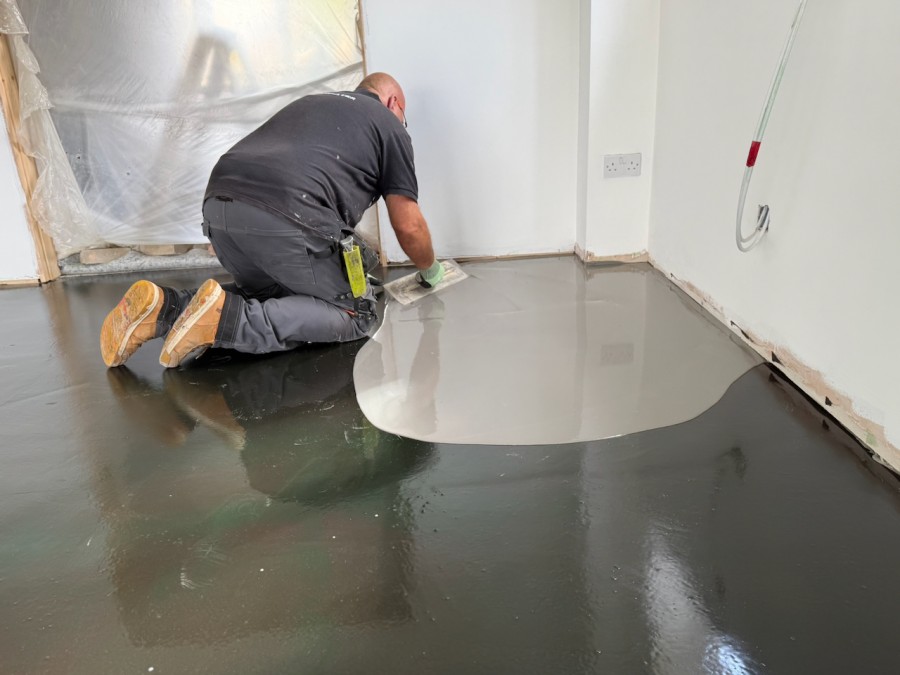
Contractor, Midgard, used calcined clay concrete to construct a permanent suspended slab within Brent Cross Town’s third Build-to-Rent building which will be fully operational in 2028 and comprise over 200 homes.
In total, 30% of the cement in the concrete mix was replaced with calcined clay, resulting in a 10% embodied carbon saving compared with equivalent concrete mixes previously used at the development.
Concrete is the most widely used global construction material by mass, and the manufacture of cement is responsible for around 8% of human-caused CO2 emissions each year.
As global clay deposits far exceed the demand for cement and other traditional cement replacement alternatives, widespread adoption of calcined clay concrete has the potential to deliver hundreds of millions of tonnes of CO2 reductions across the global construction sector. It also has the potential to create jobs in the UK by utilising domestic clay sources.
Calcined clay concrete has been approved under British Standards since 2019, however its adoption within the construction sector remains limited despite its considerable potential for reducing carbon emissions.
Capital Concrete provided concrete made with calcined clay from LKAB Minerals, which utilises damaged waste bricks, helping to promote sustainability and support the circular economy.
Tim Hoyland, Environment Manager at Related Argent said: “The successful application of calcined clay concrete in permanent works at Brent Cross Town is a significant step forward for sustainable construction in the UK. This material is a practical alternative to traditional cement replacement, enabling the industry to significantly reduce carbon emissions, support job creation and the circular economy. We are proud to lead by example and are committed to sharing our experience to encourage wider adoption of calcined clay concrete throughout the sector. A huge thank you to everyone who helped make this happen.”
Jack Sindhu Technical Director at Capital Concrete said: “By partially replacing traditional cement and GGBS with calcined clay, we’re able to review the amount of cement required in the mix, which in turn helps reduce embodied carbon and overall CO₂ emissions.
As a business, we’re continually exploring and developing material solutions that support customer requirements for a more sustainable built environment. Using lower‑carbon concrete technologies like calcined clay allows us to deliver high‑performance materials, while actively contributing to a more responsible and future‑focused construction industry.”
Over 1,000 people already call Brent Cross Town home following the completion of the first phase of residential buildings last year. The second phase includes the construction of 1,600 new homes including 300 co-living studios through Halcyon,150 retirement living homes delivered by Audley Group and Senior Living Investment Partners and over 660 student apartments by Fusion.