Wet rooms have become a standout feature of new-build residential and mixed-use developments.
They are appreciated for their ease of access, space efficiency and the contemporary finish they provide to properties. Still, while the aesthetic is key, at the core of any good wet room specification are the fundamentals of its construction. For architects, contractors and specifiers, all roads lead back to the desired performance.
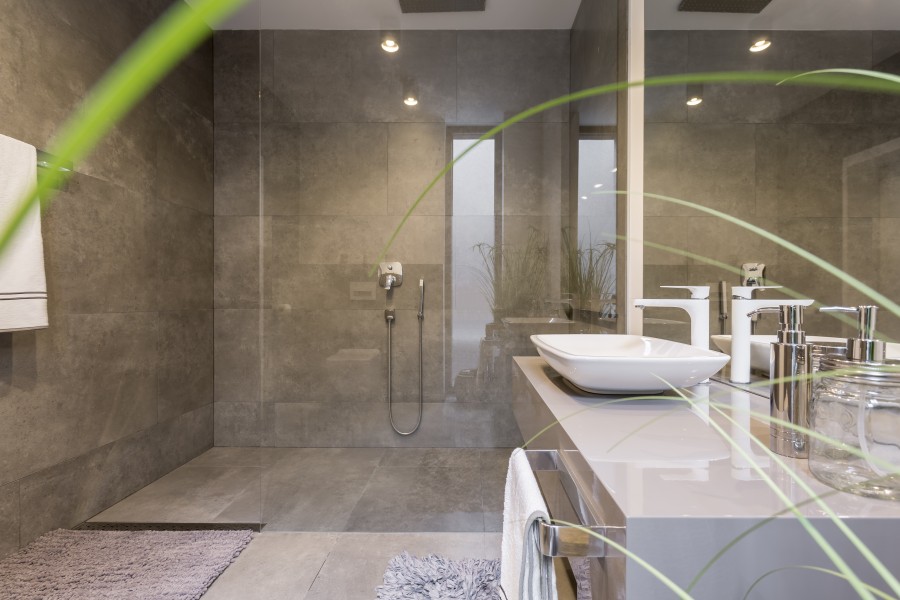
Waterproofing as the First Line of Defence
Effective waterproofing is vital in any wet room. Unlike traditional bathrooms, where at least part of the floor is solid and any walls are covered with tiles, wet rooms are fully open to water. All waterproofing systems, be they liquid membranes, decoupling layers, sealing tapes, or waterproof boards, should be seen as a continuous system, rather than isolated components.
Compatibility between the substrate and the waterproofing is especially important in today’s new homes and, in particular, where underfloor heating and timber floors are involved. Too often, the failure at junctions, penetrations, or thresholds has resulted in time-consuming and expensive remedial work to complete, and the earlier any of these areas can be defined, the better.
Structural Floor Preparation and Falls
The type and quality of the build-up to the flooring system affect performance and longevity. Ensuring the correct falls to the drainage points isn’t simply a case of the installer’s expertise; it needs focus as early as the system’s selection.
Pre-formed shower trays are becoming popular for their consistent gradients, which help reduce plumbing issues and meet the performance criteria. Bearing is an issue, particularly on multi-residential projects or where heavier surface finishes are specified, such as natural stone.
Sub-floor handling, deflection, and integration with the supporting screed build-ups can all increasingly affect the system’s performance. Refurbishment applications may come under depth restrictions, in which case, the need for low-profile systems or recessed tray solutions is the appropriate selection.
Drainage Integration and Performance
The correct design of drainage may be the difference between a well-performing wet room and a troublesome one. Channel drains and point drain washroom shower options each deliver certain specification advantages depending on design layout, anticipated water flow rates, and maintenance preference.
Drainage gullies must be sized according to expected water waste volumes, something which is particularly true when considering high-output showering systems. Where waste systems are concerned, a primary requirement is to provide the installer with a practical and easy-to-use connection to the drainage system, and at the same time, provide the facility management staff with a solution that is maintenance-friendly. It is all well and good having the gully require minimal maintenance, but not if this means locating the waste pipe connections inside a ceiling void access panel, for example.
The provision of well-designed, durable shower trays takes on great significance, to ensure accurate falls and successful drainage, supported by other characteristics to guarantee lengthy performance over a number of years of showering.
Compliance with UK Standards
Specifiers can take the pain out of specification if they comply with UK building regulations and standards. Building Regulations Part H for drainage, and, where required, Part M for accessibility and slip resistance requirements for floor finishes.
Specifiers should also consider whether there are fire performance requirements for waterless wet rooms in multi-storey blocks of apartments, acoustic requirements for wet room installation in housing developments, and manufacturer warranties, which should be tied to compliance with the system as tested. In most cases, this information can easily be found in our Performance Series tables and is available from manufacturers.
The Role of Specialist Product Selection
Product selection increasingly centres on complete system thinking rather than individual components. Suppliers, such as Wetrooms Design, provide wet room shower trays and associated components designed to support both residential and commercial construction requirements. Their range of systems reflects the growing demand for solutions that combine reliable falls, structural performance, and compatibility with wider waterproofing and drainage specifications.
For project teams, sourcing from specialist suppliers can help streamline coordination between products while supporting technical consistency across a scheme.
Performance Starts in the Detail
In wet room construction, performance is all in the details. The integrity of the waterproofing, the preparation of the structure, coordination with the drainage and choice of materials all contribute to a long-lasting and compliant installation. As wet rooms continue to feature in contemporary construction, meticulous technical specification is required if they are to perform as well as they look.