The Masonry Association of Great Britain (MAGB) has formally announced the creation of its new Technical Committee, a cross-sector body established to strengthen technical leadership and raise standards across masonry construction, alongside publication of its first official Technical Note.
Technical Note TN-01/26 addresses the installation of cavity fire barriers and raises concerns about the increasing use of zero-compression products, which the Committee believes present a foreseeable long-term life-safety risk when used in structures subject to movement.
The publication represents the first step in a broader programme of work aimed at raising awareness of long-term fire safety performance within masonry construction.
The Masonry Association Technical Committee brings together senior technical specialists from across the masonry supply chain, including brick and component manufacturers, fire barrier and insulation suppliers, façade contractors, structural engineers, warranty providers and training bodies.
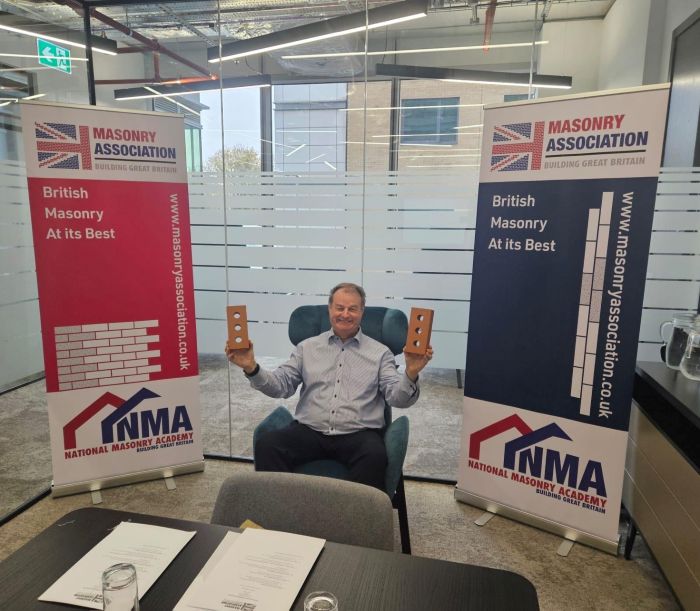
The Committee has been established to identify emerging technical risks within masonry construction, provide clear evidence-based guidance, and help bridge the gap between laboratory testing and real-world building performance. TN-01/26 represents its first formal publication and signals a more proactive technical role for the Association.
The Association has confirmed that further Technical Notes and guidance documents will follow, forming part of an ongoing commitment to improving understanding of real-world building performance and lifecycle safety.
The Technical Note explains that while zero-compression cavity barriers may achieve compliance in laboratory fire testing, buildings are not static systems. Structural frame shortening caused by creep and shrinkage, brickwork settlement, mortar movement, thermal expansion and construction tolerances can all increase cavity dimensions over time. Barriers installed without positive compression rely entirely on perfect geometry at the point of installation. As movement occurs, even gaps of only a few millimetres may allow flame and hot gases to bypass the barrier. Because these interfaces are concealed once construction is complete, such failures are not detectable through routine inspection, creating significant life-safety, liability and reputational risk.
The Committee’s guidance states that fire safety performance must be considered over the full life of a building rather than solely at the point of laboratory tests. It recommends that horizontal and vertical cavity fire barriers are installed with compression, with a nominal minimum preload of 5mm unless greater compression is justified by manufacturer testing, in order to maintain contact and integrity under long-term movement conditions.
The Technical Committee is chaired by Keith Aldis of MAGB and brings together senior technical representatives from across the full masonry supply chain. Its membership spans brick and component manufacturing, stone and GRC, mortar and structural systems, cavity barriers and insulation, damp-proofing and membranes, fixings, installation specialists, engineering, warranty providers, education and training bodies. The Association says this breadth of expertise ensures that its guidance is both technically rigorous and grounded in practical site experience.
Keith Aldis, Chair of the Masonry Association Technical Committee, said: “This Committee has been formed to bring senior technical expertise from across the masonry sector into one forum with a clear purpose - to identify emerging risks and provide practical, evidence-based guidance to the industry.
Our first Technical Note (TN-01/26) reflects our collective assessment of how buildings behave in reality over time. Laboratory fire testing is conducted under controlled conditions, but real structures are subject to settlement, shrinkage and differential movement. Positive compression in cavity fire barriers is fundamental to maintaining contact and continuity as that movement occurs. Our guidance is intended to support long-term fire integrity and promote durable, movement-tolerant solutions across the sector.
This publication is the first in a series of Technical Notes intended to support long-term fire integrity and promote movement-tolerant, durable solutions across the sector.”
TN-01/26 is available now atwww.masonryassociation.co.uk.