Security threats and compliance requirements are rapidly evolving. 2026 security trends will redefine how project management and architecture can protect people, assets, and operations.
Here are six security trends already shaping the future of building security.
Trend 1: AI-Powered CCTV
AI-powered CCTV is transforming surveillance from passive monitoring into proactive threat detection.
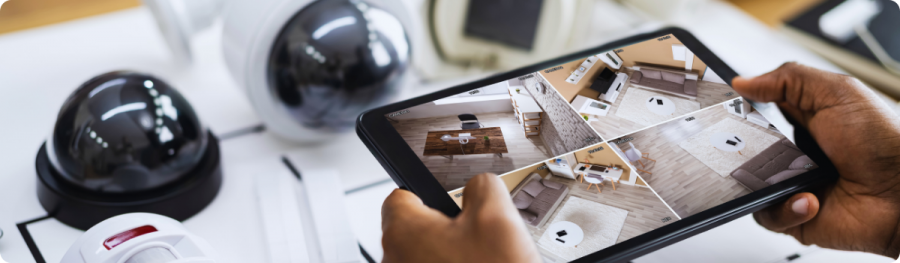
Traditional CCTV relies on manual footage review, often after an incident has occurred. AI-powered CCTV, however, can identify business-specific risks such as unattended items, unauthorised individuals, or unusual behaviour in real time.
Building managers can now detect potential threats early, triggering instant alerts so staff can respond before situations escalate. AI-powered surveillance also supports Martyn’s Law compliance by adding an intelligent layer of protection against terrorist threats in public venues.

Trend 2: Remote Access Monitoring
Remote access monitoring is changing how organisations manage security by enabling secure system access from anywhere. Workplace accidents, asset damage, or disputes often occur when managers are off-site. Remote monitoring allows decision-makers to instantly verify events, review evidence, and take informed action.
Real-time visibility improves response times, strengthens risk management, and ensures critical security decisions are not delayed by location.
Trend 3: Touchless Access Control
Touchless access control systems are modernising entry management while improving both security and usability. By reducing reliance on physical keys and cards, these systems improve hygiene, streamline building flow, and minimise the cost and risk associated with lost credentials. Access permissions can also be updated quickly across large or complex sites.

Trend 4: Biometric Access Control
Biometric systems deliver highly secure, tamper-resistant access control for high-risk and high-value environments. Using unique identifiers such as fingerprints, facial recognition, retina scans, or voice patterns, biometric access ensures only authorised individuals can enter sensitive areas.
These systems are particularly critical in environments such as airports, prisons, and financial institutions, where accuracy, accountability, and security are essential.

Trend 5: Lockdown Alarm Systems
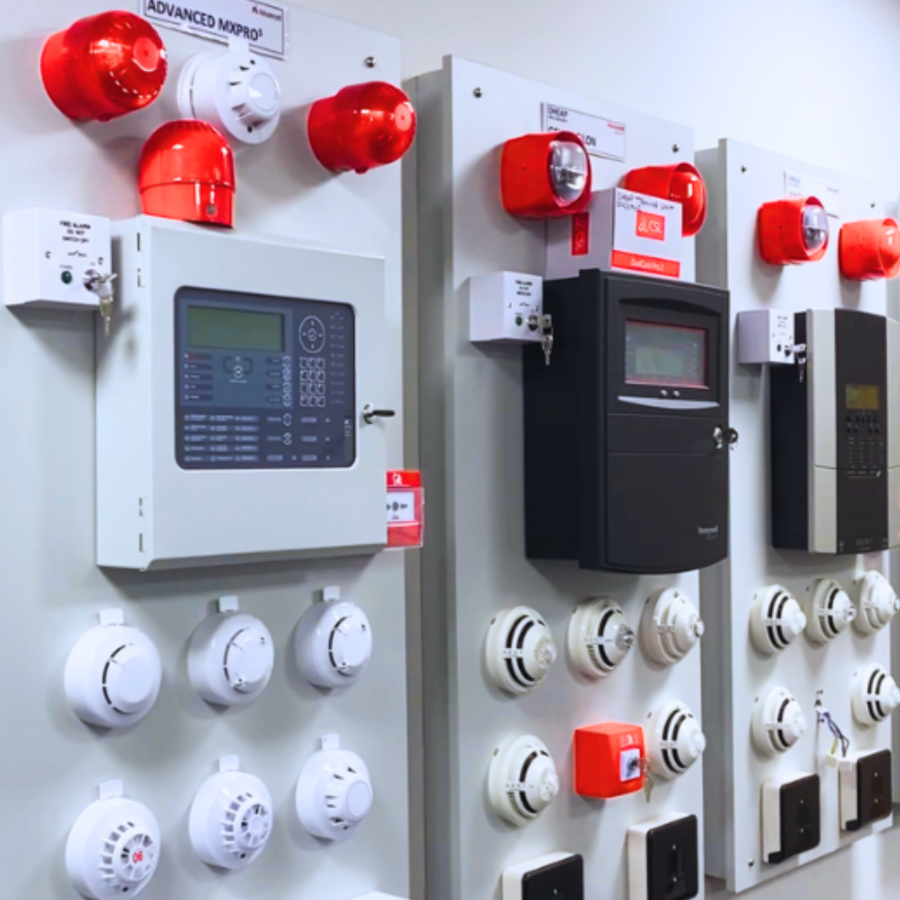
The Terrorism Protection of Premises Act 2025, known as Martyn’s Law, has driven wider adoption of lockdown alarm systems in new building designs. These systems enable rapid, coordinated responses to critical incidents such as terrorist threats or external hazards.
Once activated, occupants receive immediate alerts through audible sounders, visual beacons, and clear instructions directing them to safe areas. Integrated communication ensures responsible personnel and emergency services are notified without delay, reducing confusion when time is critical.
Trend 6: Fully Integrated Security Systems
Fully integrated security systems are replacing standalone solutions across both new and existing buildings. By combining surveillance, access control, alarms, and communications into a single platform, integrated systems provide site-wide protection rather than isolated coverage.
This approach simplifies security management, enables data-driven decision-making, and delivers more effective responses to modern risks.