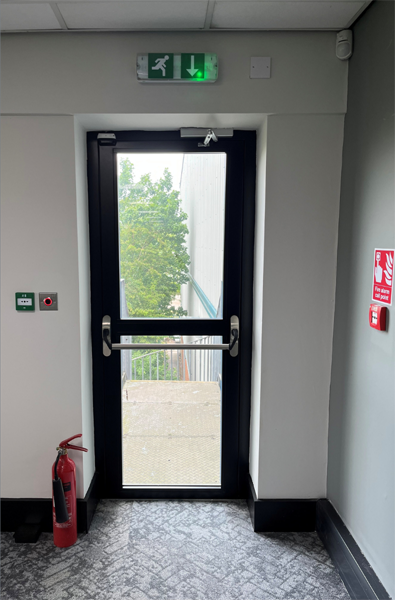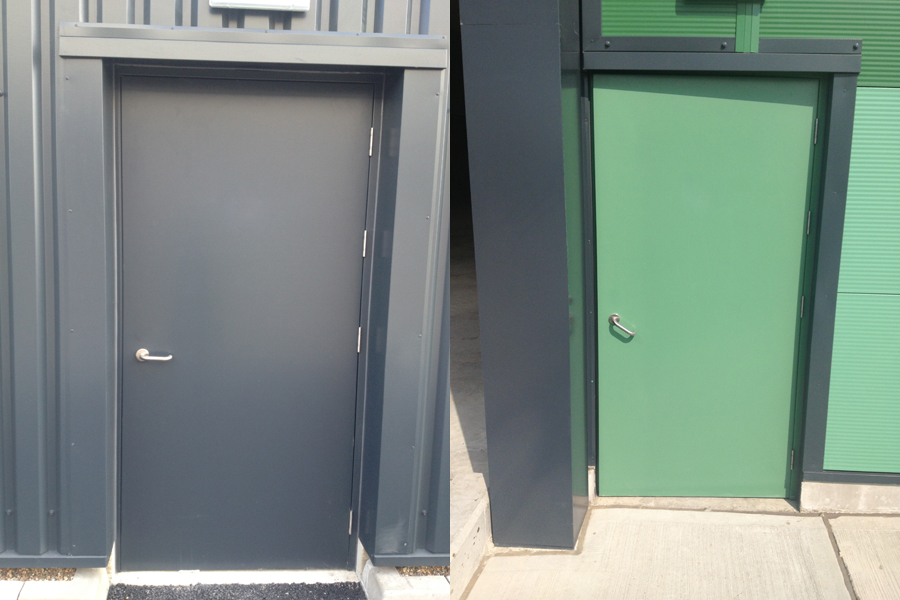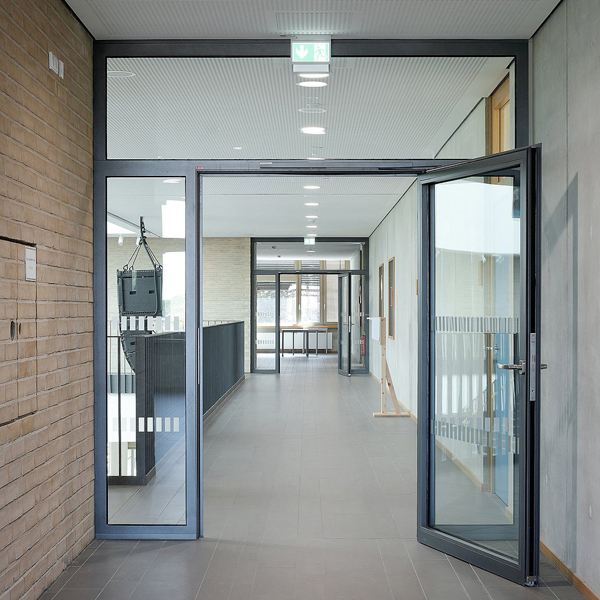
Paul Williams, Commercial Director at steel door manufacturer Robust UK, discusses the key factors that specifiers should consider when selecting a security-rated steel doorset.
“Selecting the correct security door relies on understanding its purpose, daily use and the level of protection required. A key part of this decision is choosing a doorset that has been independently tested and certified to recognised standards. If a doorset is properly certified, it will meet the required performance criteria.
Ensuring compliance
Security doors intended for residential or commercial applications should meet recognised security standards such as PAS 24 or LPS 1175 certification to prove the door has passed rigorous testing to resist forced entry and burglary.
PAS 24 testing verifies a door’s ability to resist forced entry using a range of attack methods, ensuring protection from unauthorised entry. LPS 1175 accreditation goes further, offering eight different security ratings (SR) which provides a level of resistance to opportunist attempts at forced entry using physical force and hand tools to extreme means of attempting forced entry with the use of heavy tools, firearms or vehicles. Once the steel doorset is PAS 24 or LPS 1175 certified, they can be Secured by Design approved, the police initiative to design out crime.
High-security environments may require resistance to more sustained tool-assisted attacks. Doorsets tested to LPS 1175, such as TUFF-DOR 2.1 which provides an SR2 rating against opportunist attempts at forced entry. TUFF-DOR 3.1 is certified to SR3 to provide moderate resistance to determined attempts of physical force and hand tools. On the other hand, TUFF-DOR 4.1 is certified to SR4 which offers resistance to experienced determined attempts at forced entry using hand tools and battery power tools.
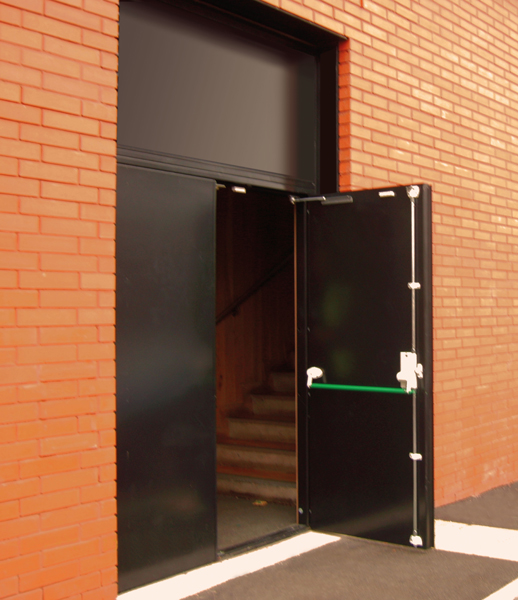
Steel doors with fire and security protection
Many areas in a building require both fire protection and security performance. These requirements cannot simply be achieved by combining individual fire-rated and security-rated components. Instead, the complete doorset must undergo rigorous testing and certification for both attributes.
Doorsets tested to EN 1634-1 and certified to 30, 60, 90, 120 or 240 minutes fire resistance help to maintain safe evacuation routes, resist warping or structural failure under fire conditions. Specifiers must ensure that the entire doorset has been tested as a single integrated system to ensure performance.
Specifiers can achieve safe and quick escape during emergencies while securing the building against external threat with doorsets such as SECUR-DOR 2.1. This security door incorporates exclusive cost effective PAS24 tested hardware from specialist manufacturer HOPPE (UK), providing enhanced security with minimal additional cost. When fitted with appropriate hardware, these doorsets are capable of resisting attack with the intention of delaying and deterring intruders.
Security and fire doors can also be supplied glazed or unglazed, depending on visibility, acoustics, aesthetic or daylighting requirements. Where glazing is required, selecting a strong certified glazing system is essential to maintain fire performance. For instance, GLAS-DOR is a fully glazed steel profile solution for hinged or sliding doors, partitions, facades and screens which provides up to 60 minutes fire resistance (E60) or both resistance and insulation for up to 90 minutes (EI90).
Modern fire doors require much more than providing fire protection such as offering acoustic and security performance. GLAS-DOR delivers up to 45dB acoustic reduction and offers intruder resistance to EN 1627 (RC2 to RC4). It can also be supplied ballistic resistant to EN 1522-2 on request and smoke rated to EN 1634-3, providing a complete multi-functional solution.
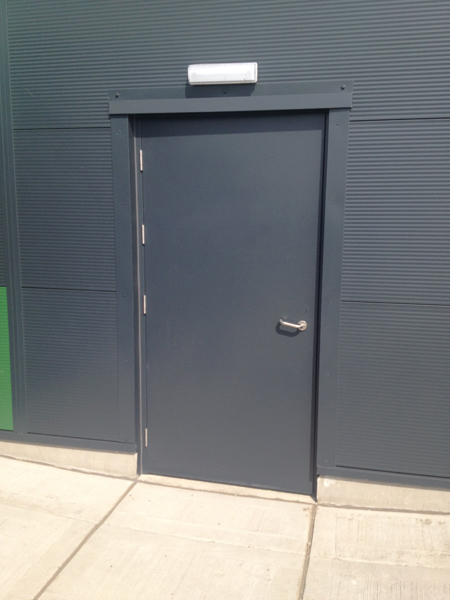
Material choices and tolerances
Material choice plays a crucial role in door performance. Steel doors are renowned for their inherent strength and long-term durability. Their resistance to corrosion, impact and wear significantly outperforms timber or aluminium in high-security environments.
It is equally important to consider installation practicality. Door frames must be manufactured to tight tolerances, yet adjustable headers and frames allow installers to achieve a perfect fit without compromising on performance and aesthetics, saving time and further costs. Installing a certified doorset within tight tolerances ensures that fire, thermal and security performance remain fully compliant.
Choosing the right steel security doorset
Selecting the appropriate steel security doorset is about choosing a door solution that has been independently tested and proven to perform. A well-specified doorset should be fully certified to meet the needs of its environment, whether that includes fire and security protection or enhanced acoustic performance. By evaluating certification, fire resistance, construction quality and long-term maintenance requirements, specifiers can ensure they select security steel doors that deliver the best possible protection.”
For more information on security steel door specifications, visit www.robust-uk.com or contact 01782 592900 / sales@robust-uk.com.