In high-tech environments, such as electronics assembly, test labs, cleanrooms, server rooms, and medical device production, uncontrolled static can cause invisible damage that leads to product failures, costly rework, and unpredictable production stoppages.
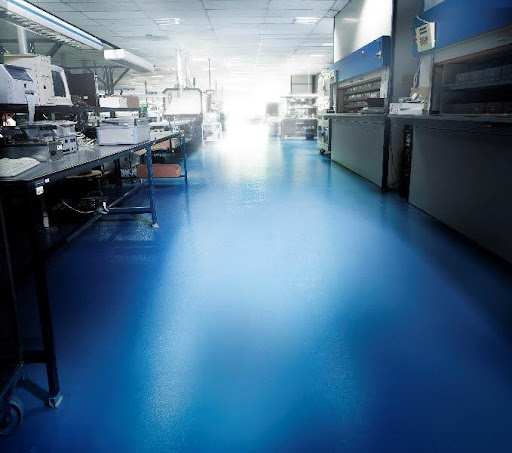
Arturo ESD anti‑static resin flooring tackles this challenge at the foundation: a resin‑based, multilayer floor system that channels charge safely to earth while delivering industrial resilience and an easy‑to‑maintain finish.
Did you know that correctly specified ESD flooring commonly targets surface resistivity in the range of 10^4 to 10^9 ohms per square to dissipate charge rather than trap or short it. How much could you save by preventing the next static‑related failure before it happens?
Learn More About ESD Flooring System
Key benefits (what Arturo ESD resin flooring delivers)
Controlled electrostatic discharge: Engineered electrical properties ensure charges bleed away safely instead of discharging through sensitive components.
Seamless, hygienic surface: Resin systems create continuous floors without joints that trap dust or particles, ideal for controlled environments.
Robust mechanical performance: High resistance to abrasion, impact and rolling loads keeps floors serviceable in busy production areas.
Chemical and stain resistance: Durable topcoats withstand common cleaning agents and process chemicals.
Predictable installation and fast return to service: Layered application enables planned downtimes and reliable performance.
Aesthetic and functional versatility: Available in colours and finishes to support zoning, safety marking and branding.
Typical technical highlights
System type: resin-based, conductive/dissipative multilayer system
Surface finish: seamless, low‑porosity resin topcoat for easy cleaning
Electrical behaviour: designed to achieve stable surface resistivity in the dissipative‑to‑conductive range (commonly targeted at 10^4–10^9 ohms/sq. depending on specification)
Grounding: integrated grounding/earthing paths or copper strips provide a defined path to earth
Thickness: selected to balance mechanical protection and electrical performance based on traffic and load
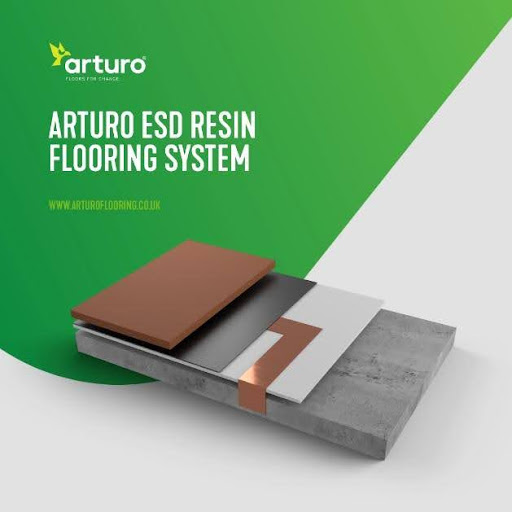
Specification matters
Choosing the right ESD class (dissipative vs. conductive), grounding approach, and system thickness depends on the sensitivity of your equipment and the risk profile of your processes.
Successful specification balances electrical performance with mechanical durability and the required cleaning regime, and it always includes post‑installation testing.
Request a Specification
Next steps / Call to action
If static poses a risk in your facility, audit your flooring strategy: measure current surface resistivity, review grounding plans, and evaluate whether a resin‑based ESD floor could lower failure rates and maintenance costs.
For tailored recommendations, request a site survey to determine the right Arturo ESD system for your application and to receive a specification aligned with industry ESD standards such as IEC 61340‑5‑1