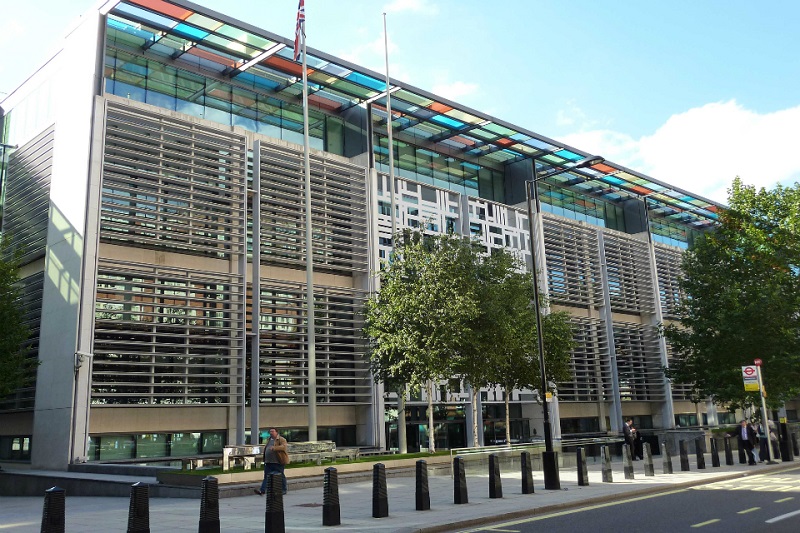
Weaknesses in the Ministry of Housing, Communities & Local Government’s (MHCLG) developer contributions system - intended to fund essential local infrastructure like schools, roads, public transport, and affordable housing - are undermining councils’ ability to negotiate with developers, says the NAO.
The latest report by the independent public spending watchdog assesses MHCLG’s oversight of the developer contributions system in England - it found a range of issues including incomplete data and local authority staffing gaps to unsold affordable homes and unspent funds.
Local Planning Authorities (LPAs) who are responsible for securing developer contributions through a negotiated Section 106 agreement or a set CIL are facing staff shortages and a gap in skills compared to large developers who often have specialist negotiators.
Section 106 agreements, which can be used to help fund affordable homes, are often complex and resource intensive because they are individually negotiated. In 2023/24, 44% of all affordable homes delivered in the year (over 27,000 homes) were funded through Section 106 agreements. However, as of October 2024 according to a Home Builders Federation (HBF) survey, 17,400 affordable homes remain unsold to registered providers of social housing.
In contrast, the CIL is transparent and can be charged on new development to fund a wide range of infrastructure but cannot be spent on affordable housing. As of November 2024, 52% of LPAs were operating a CIL.
Developers can use financial assessments to contend that a site is not viable, having accounted for the appropriate Section 106 contributions and a typical profit margin of 15-20% of the development’s value, as set out in planning guidance. These assessments are often hard for local authorities to challenge due to a lack of transparency, limited expertise, and the ability of larger developers to use consultants to reduce their contribution obligations. MHCLG acknowledges that its guidance on financial viability needs updating and aims to do this in 2025.
Since 2019, all local authorities that receive Section 106 monies or the CIL have been required to publish an annual infrastructure funding statement (IFS) each year, starting in December 2020 reporting on the preceding financial year. IFSs have been published but can be produced with varying levels of detail, and some authorities do not produce them on time. MHCLG therefore has incomplete data on developer contributions, but its latest estimate suggested that the value of agreed developer contributions in published IFSs was £5.5 billion in 2022-23, down from £6.4 billion in 2019-20.
Furthermore, many local housing targets have changed - some significantly - making existing local plans outdated and increasing the need for new infrastructure. As of February 2025, the NAO found 86 LPAs (fewer than a third of the total) had an up-to-date local plan, even though government planning policy says they should be reviewed every five years. When the NAO last reported on this in February 2019, 149 LPAs had an up-to-date local plan.
In 2024, the Home Builders Federation estimated that local authorities in England and Wales held over £8 billion in unspent developer contributions. There are valid reasons for this, including the length of time it takes for some projects to complete, but if Section 106 monies are not spent as agreed they can be returned to developers.
Government has launched several programmes to help make the system more effective. They include initiatives to enhance the skills of local planners, and to assist new housing schemes that are progressing too slowly. In December 2024, government also launched a service to better match up buyers and sellers of affordable housing funded through Section 106.
The NAO has made several recommendations to MHCLG, including:
- evaluating the initiatives that aim to help local authorities build the skills and capacity they need to manage developer contributions effectively;
- reviewing how financial viability assessments are used, including looking at potential conflicts of interest and assessing whether more transparent methods (like open-book costing) would work better; and
- encouraging wider use of the CIL, by removing barriers to introducing it for areas where that would be a viable approach.
Gareth Davies, head of the NAO, said: "To ensure the developer contributions system delivers value for money, important issues must be addressed, including reducing the imbalance in skills and experience between Local Planning Authorities and large developers; the complexity of financial viability assessments; and the lack of coordinated central government support.”