The Department for Levelling Up, Housing and Communities has published the English Housing Survey for 2020-2021, which is partly carried out by BRE.
This year’s data reflects the impact of the pandemic, with households reporting a decline in wellbeing and an increase in loneliness.
The challenges of the pandemic and social distancing rules in place in March 2020 meant that the survey had to be adapted, so that the data could still be collected. The English Housing Survey usually consists of a face-to-face interview with around 13,300 households followed by a physical survey of around 6,200 dwellings and has been carried out since 1967. Since 2011, the survey has been carried out by a consortium of BRE, NatCen, and CA Design Services.
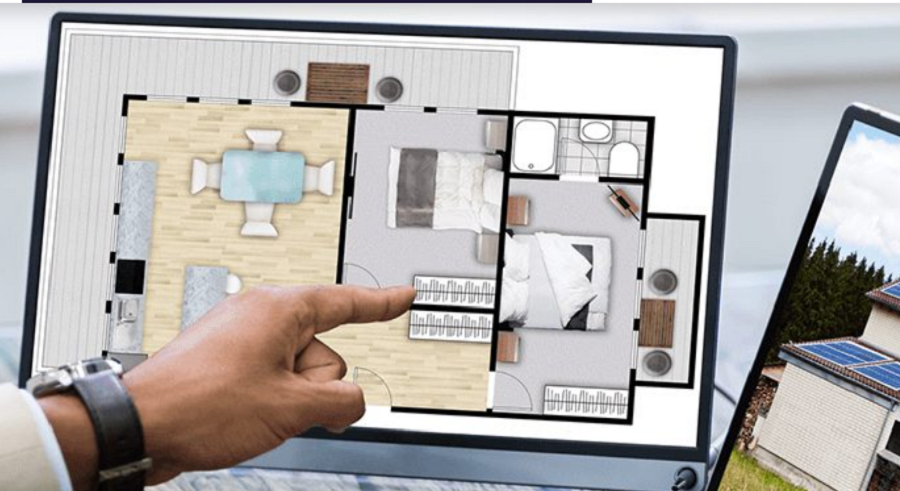
Instead of entering homes in person, we conducted telephone interviews and an external survey of the home, collected supplementary information from households on the doorstep and used administrative data such as EPCs, Google Maps and Rightmove. Data was also extrapolated from previous surveys to derive some quality indicators such as Decent Homes and serious dampness.
Such a major change in the approach to data collection without thorough testing to examine the impact on the survey would not normally be made, but the pandemic required us to innovate to keep the survey going. This means that is unclear to what extent changes observed in 2020-21 are the result of the change to the methodology, or real change (for example, as a result of coronavirus and a change in people’s housing circumstances). However, it is not possible to differentiate mode affect from real change, and it will take several years to see whether the changes observed in 2020-21 are sustained over the longer term.
The main findings of the report are:
- Between 2019-20 and 2020-21, wellbeing levels declined and loneliness increased. In 2020-21, the average life satisfaction score was 7.3 (out of ten) down from 7.7. This varied by tenure. Average life satisfaction among owner occupiers was nearly one point higher than for those living in the social rented sector (7.5 compared with 6.7). Owner occupiers were also less anxious than renters, scoring 2.8, compared with 3.8 for social renters and 3.3 for private renters.
- The energy efficiency of the English housing stock has continued to improve. The social sector remains more energy efficient than the private sector. In the social rented sector, most dwellings (66%) were in energy efficiency ratio bands A to C, compared to private rented and owner-occupied dwellings (both 42%).
- Owner occupation rates did not increase between 2019-20 and 2020-21, but rates are up over the longer term. Since 2013-14 there have been more outright owners than households with a mortgage. In 2020-21, 35% of households were outright owners while 30% were buying with a mortgage.
- The proportion of households in the social rented sector has not changed for more than a decade however, the composition of the social sector has changed over the last decade. In 2010-11, the social rented sector accounted for 17% of households with 9% (2.0 million) renting from housing associations and 8% (1.8 million) renting from local authorities. In 2020-21, 10% (2.4 million) rented from housing associations, and 7% (1.6 million) from local authorities.
- On average, owner occupied homes are larger and are more likely to have outside space than rented homes. Dwellings in London (55%) were much less likely to have a private plot than the rest of England (85%) and 12% of dwellings in London had no plot at all.
- There remains a lower proportion of non-decent homes in the social sector than in the private rented and owner-occupied sectors. In 2020, 13% of dwellings in the social rented sector failed to meet the Decent Homes Standard. This is lower than the proportion of private rented (21%) and owner occupied (16%) homes.