The latest HUGSI report shows that cities around the world have become greener over the past five years, and their green spaces have become healthier.
During this period, the amount of urban green space increased by almost 1.8 billion m2 globally. However, urban green space declined between 2019 and 2020 by 78 million m2. Charlotte, USA, is the greenest city on the index, followed by Durban in South Africa and Vilnius, Lithuania.
Husqvarna’s HUGSI ranking uses AI and satellite data to monitor urban green spaces and their health in 177 cities in 60 countries across the globe.
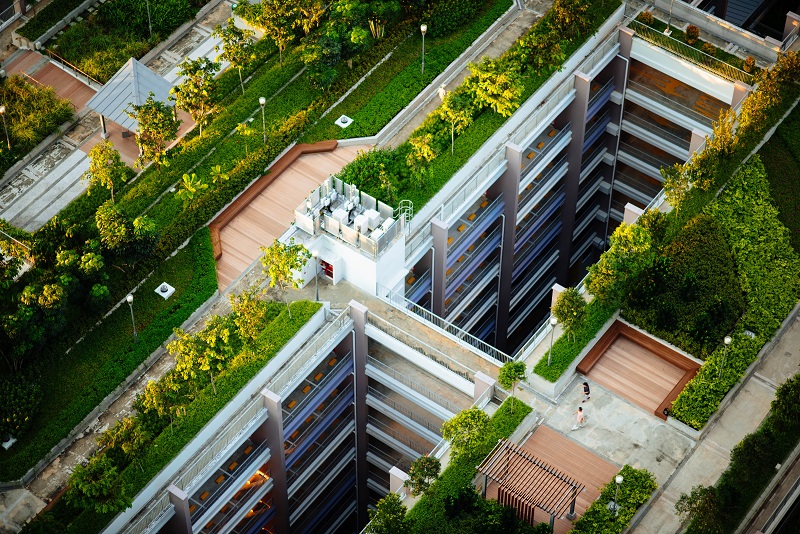
The pandemic has confined many people to the cities they live in, making urban green spaces more important than ever. As a contrasting trend, Husqvarna’s HUGSI ranking shows that the amount of urban green space declined by 78 million m2 globally in 2020, particularly in Central East Asia which made up over half of that number (44 million m2). As cities around the world continued to expand last year, the construction of green spaces failed to keep up. Indeed, the expansion of urban green space was six times higher in 2019 compared to 2020.
On a positive note, the world’s cities became 1% greener over a longer, 5-year perspective. Urban green spaces currently make up an average of 41% of urban areas and are highest in Europe at 47%. Cities are also taking better care of their green spaces, as they became 10% healthier from 2016 to 2020. That metric is measured using the Normalized Difference Vegetation Index (NDVI), which is the international standard for measuring the health of vegetation.
Caracas, Venezuela saw a significant increase in green space and gained 38 places on the index in 2020, more than any other city. The second biggest climber was Lisbon, Portugal (26), followed by Nairobi, Kenya (22), Barcelona, Spain (22) and Quito, Ecuador (17).
The HUGSI (Husqvarna Urban Green Space Index) is an AI-powered satellite solution that helps city authorities understand how green their cities are by observing them from space. In 2020, a total of 177 cities in 60 countries were scored on a number of indicators, such as percentage of green spaces, vegetation health, percentage of grass and lawns, and percentage of trees.
Thanks to the application of machine vision and deep learning techniques to satellite images, HUGSI provides insights into the current state and historical development of vegetation and its surroundings in urban areas.
Learn more about HUGSI at https://www.hugsi.green