The Association for Specialist Fire Protection (ASFP) has released three new Advisory Notes which offer guidance on the fire protection of structural steel, addressing specific concerns identified by industry.
Advisory Note 19: ASFP Position on the Use of Critical Steel Temperatures above 650°C updates a previous edition released in July 2020. It highlights that it is vital to ensure that the appropriate limiting temperature is used in the specification of a reactive coating. Use of an elevated temperature (above 650°C) without the appropriate engineering checks could potentially leave a structure under-protected in a fire situation.
This reinforces the best practice guidance contained within Advisory Note 12: Best Practice Guide for Specifying reactive coatings for structural steel fire protection, published jointly by the ASFP and the British Coatings Federation, which advises that if a limiting temperature of above 650°C is specified, then a second opinion must be sought from a structural engineer with appropriate fire design and engineering experience.
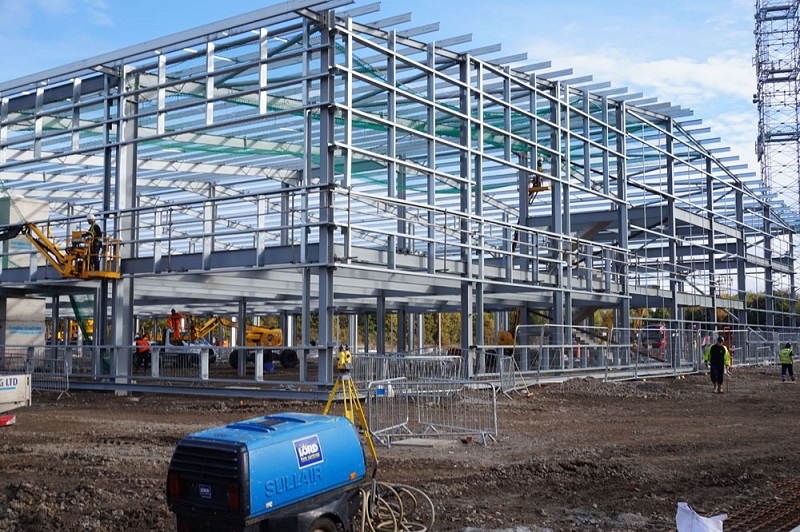
ASFP Advisory Note 23: ASFP Position on Secondary Steelwork provides advice on the protection of secondary steelwork, offering a useful flowchart to assist in determining whether protection is necessary and how best to provide it in different scenarios. The document defines what is deemed to be primary and secondary steelwork. It advises that steel bracing members required to provide stability to the structure at the fire limit state should have adequate fire resistance unless alternative load paths can be identified.
The Note recommends that Project Design Teams and / or Structural Engineers review all available advisory documents regarding the need for the provision of fire protection for secondary steelwork, stating that this is not the responsibility of the fire protection installers or manufacturers of fire protection systems. It states that the Steelwork Designer should be consulted to identify Primary Bracing versus Secondary Elements highlighting that, where doubt exists, the assumption should be that the bracing is a Primary member and full protection provided. Where fire protection to secondary bracing members is necessary, the protection thickness should be based on the section factor of the member or a value of 200 m-1, whichever is the smaller value.
Where the actual section factor is less than 200m-1, then the corresponding limiting steel temperature should be in accordance with the Column default temperature for Eurocode or British Standard designs as per ASFP guidance in Tables 16-18. Where the actual section factor is greater than 200m-1, a section factor of 200m-1 should be used and a limiting steel temperature of 500°C. For all Secondary Element members, the protection thickness should also be based upon the appropriate Column data set (I section or Hollow section). The document provides guidance on scenarios where it might not be necessary to apply fire protection to Bracing members.
Advisory Note 24 ASFP Position Paper on the use of Yellow Book Critical Temperatures for the UK (or equivalent) Market offers a range of proposals aimed at updating certain tables in the fifth edition of the ASFP’s Yellow Book: Fire protection for structural steel in buildings.
The 5th Edition of the Yellow book was published to enable adoption of new European testing and Assessment methods – alongside amendments to the pre-existing UK test and assessment methods.
In 2014, the ASFP introduced three new tables (Tables 16-18) of default temperatures in the Yellow Book, covering both the historical BS 5950 and newer Eurocode design scenarios. These tables were accompanied by a flow chart to help specifiers chose the correct table. However, these were considered over complicated, and have now been reviewed to offer clearer and easier to understand guidance.
Advisory Note 24 introduces the proposed revisions. It highlights the importance of understanding and using the correct Codes and Occupancy (Building Category) in the design process as these can have a significant effect on the Critical Temperature of a steel frame; and consequently on the required thickness of Intumescent coating. It states that if the use of the building is not known, whether using BS 5950 or Eurocode, use of the Storage Category should be adopted.