Wood for Good has responded to the Environmental Audit Committee's (EAC) recent inquiry into the sustainability of the built environment.
The organisation has echoed others within the timber industry such as TDUK and the STA in its response and do not believe that the Government has met the Climate Change Committee's recommendations to decarbonise the structural fabric of new homes and to do so, stronger action must be taken.
As part of Wood for Good’s response, it is calling on the UK Government to:
- Introduce policies for reducing embodied carbon, focusing on a fabric first approach and the use of natural materials
- Create targets for use of low-carbon materials or sustainable design
- Incentivise retrofit through an immediate VAT reduction
- Lead by example in sustainably designed public buildings
- Provide clear guidance and support for developers on selection of low-carbon materials and design
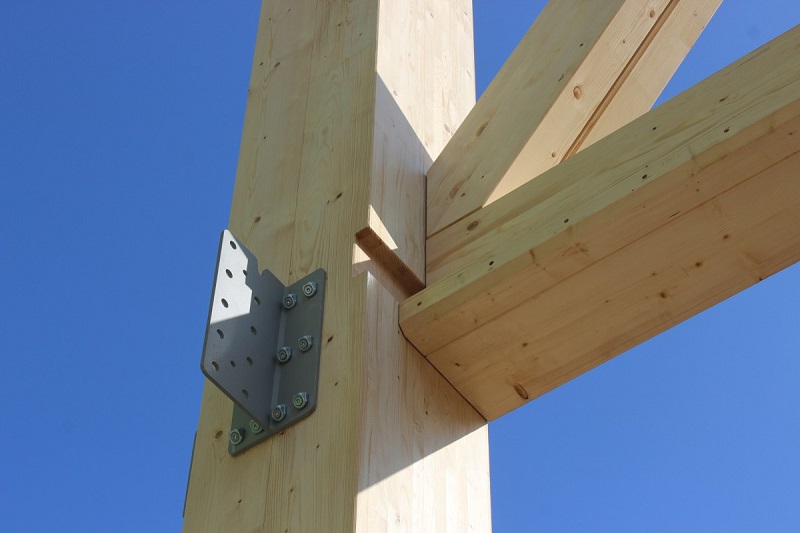
As a low-carbon, naturally renewable, and sustainable construction material, timber is necessary for the construction industry to reach its emissions reduction targets.
Wood has a significant role to play in helping to decarbonise the structural fabric of new and existing homes.
Timber can help to reduce the embodied carbon cost of a building by:
- Acting as a form of carbon capture and storage as the carbon dioxide sequestered by trees is stored in the wood product created for that product’s lifetime.
- Increasing the number of trees grown in sustainably managed forests, which leads to sequesteration of more carbon dioxide.
- Displacing other carbon-intensive materials such as cement and steel with wood helps to reduce the carbon footprint of a building.
Additionally, timber can also play a part in reducing the operational carbon costs of new buildings.
- Wood fibre insulation and other wood materials can reduce operational heating and energy costs thanks to wood’s natural insulating properties.
- Wood can be used in offsite construction solutions, this helps to reduce time, resource and energy spent on-site.