The UK political
scene might appear chaotic but a series of economic and financial signals
emerged in the run-up to Christmas which offered some grounds for encouragement
for the construction industry in 2019.
Business and
consumer confidence may well remain fragile in the new year. But the economy is
still set to grow in 2019, interest rates are likely to remain low and
inflation is set to ease towards the Bank of England’s 2 per cent target.
A year-end report
from KPMG forecast that the economy will grow by 1.6% in 2019. Moreover,
overall investment which slumped to just 0.3% in 2018 is forecast to rebound to
1.6% in 2019 and 1.7% in 2020. This in turn should help recovery in the
industrial and commercial construction sectors.
Indeed, the latest
JLL/Glenigan UK Commercial Construction Activity Index shows that industrial
starts were up 18% and office starts were up 13.5% in the third quarter
compared to the previous three months. Overall, the index shows work started on
£18.3 billion of commercial construction projects in the third quarter, an
increase of 1.2% on the previous quarter and up 24.1% on the same time last
year.
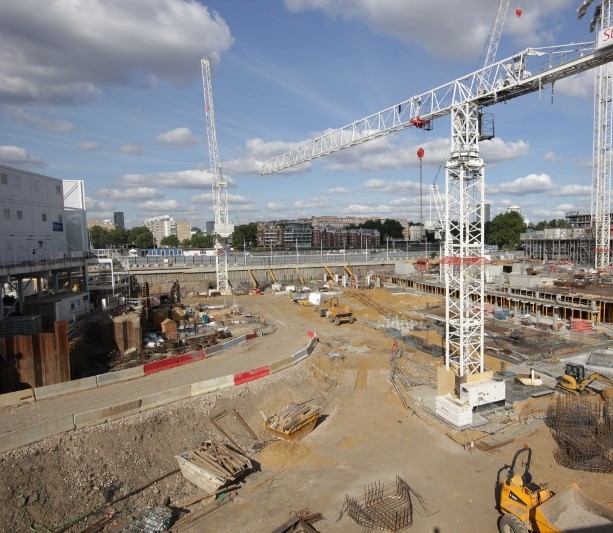
The City of London
office construction market is one key sector showing signs of promise. Savills’
latest City Investment Watch notes that 2018 has seen increased demand for more
sites which offer value added or development opportunities, with six deals in
the City in this category in November alone. It says that some 25% of the total
City development pipeline for 2019–2022 is already pre-let.
A rebound in City
construction volumes is also consistent with Glenigan Construction data which
points to a marked rise in detailed planning approvals for office projects in
London. They rose to around £875 million in the first 10 months of 2018, up
from £660 million in the period in 2017. Construction work on one major City
scheme, Urbanest’s £85 million development of office space with a café and
student accommodation at 35 Vine Street, is due to start in the new year
(Glenigan Project ID: 03446761).
Meanwhile, a
combination of low unemployment – forecast by KPMG to dip to 4% - and interest
rates going no higher than 1% in 2019 bodes well for the underlying health of
the private housing market. After an 11% fall in the value of private housing
construction starts in 2018, Glenigan’s latest Construction Outlook forecasts
that they will only fall by a further 1% in 2019.
Confidence among the
larger quoted private housebuilders appears to be holding up. Berkeley Group
said in December that it had invested in 11 major new urban regeneration sites,
all of them outside London.
The group is moving
into production on sites in Birmingham, Watford, Reading, Slough and Staines.
It is also bringing forward new regeneration sites in the capital.
Meanwhile, in its
final results before Christmas the quoted master developer Urban & Civic
suggested the extension of Help to Buy to 2023 should help underpin demand for
‘entry-level’ new housing. It also pointed to evidence that first-time buyers
were skipping the traditional first purchase of a one or two-bed flat and
instead moving straight to a two or three-bed house.