Scotland’s most historic buildings, along with 20 per cent of its housing stock, could benefit from a new research project into building conservation materials.
A new specification framework for lime mortars is being developed in a joint project between Heriot-Watt University and Historic Scotland. This could dramatically cut the cost of conserving and maintaining buildings like Edinburgh Castle, as well as generating business opportunities for small and medium enterprises (SMEs) throughout the country.
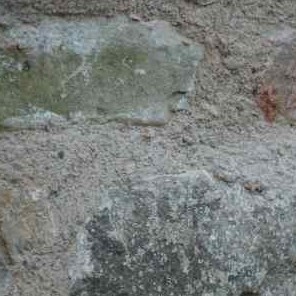
The majority of Historic Scotland’s buildings and around 500,000 houses in Scotland were built using lime mortars. From 1919, cement-based mortars became more popular. Cement mortars are generally incompatible with lime mortars and natural stone, meaning repairs and conservation attempts often fail.
The project has received £135,000 Knowledge Transfer Partnership (KTP) funding to work jointly on the ‘Limes-Quest’ project. This research will develop a new lime mortar framework, which will uncover the materials environmental and technical performance.
Roger Curtis, Historic Scotland technical research manager and project supervisor, said, “As the leading technical advisor in Scotland for repair and maintenance of historic buildings, we believe it is essential to better understand lime mortars and create a framework that be used across the country to ensure our buildings are cared for properly.
“Better understanding of lime mortars has the potential to create substantial savings. We estimate that our repair and maintenance costs across the 345 properties in our care could see a reduction as early as three years following the project.
“We should get better value for money through the use of more appropriate, greener materials, a reduction in the need to repeat conservation work, a reduction in revenue lost through visitor attractions having to close for maintenance and also through savings in grant aid for historic buildings throughout Scotland.”
Dr Alan Forster, academic supervisor from Heriot-Watt University’s School of the Built Environment, commented, “Lime mortars are regaining popularity because of their performance and green credentials. They actually absorb CO2, unlike cement. They are also more flexible and ‘breathable’ than cement mortars and so cope with moisture better, which is obviously of interest in Scotland given our weather.
“When they fell out of fashion in the early 1920s we forgot about the benefits of the use of lime mortars and their importance in constructing and repairing some of Scotland’s most iconic buildings. We need a comprehensive understanding of lime mortars so that we can prevent the deterioration of buildings and reduce the associated cost of repairs, including the time taken to try three or four different lime mortar ‘recipes’ on a structure.
“We will be testing various lime mortars’ physical strength, moisture handling characteristics and resistance to deterioration. We’ll also investigate how it reduces the carbon footprint of buildings and create a framework that can be used by Historic Scotland but will also be of value to architects, building merchants, local authorities and those generally entrusted with the repair of our traditional built environment.
“Homeowners who have had to repeatedly patch up their old homes with cement, only for it to cause problems such as rapid stone deterioration and dampness, will be aware of how beneficial this could be.”
Information published by Historic Scotland will help SMEs such as local binder and aggregate suppliers evaluate their products and promote them for regional works; raise awareness among architects and practitioners that greener and more compatible materials are available and also stimulate interest in traditional building skills.