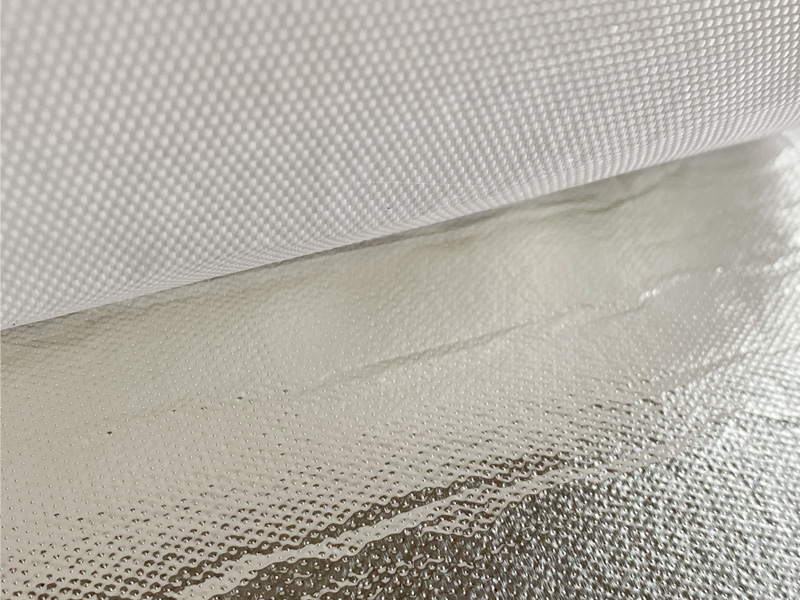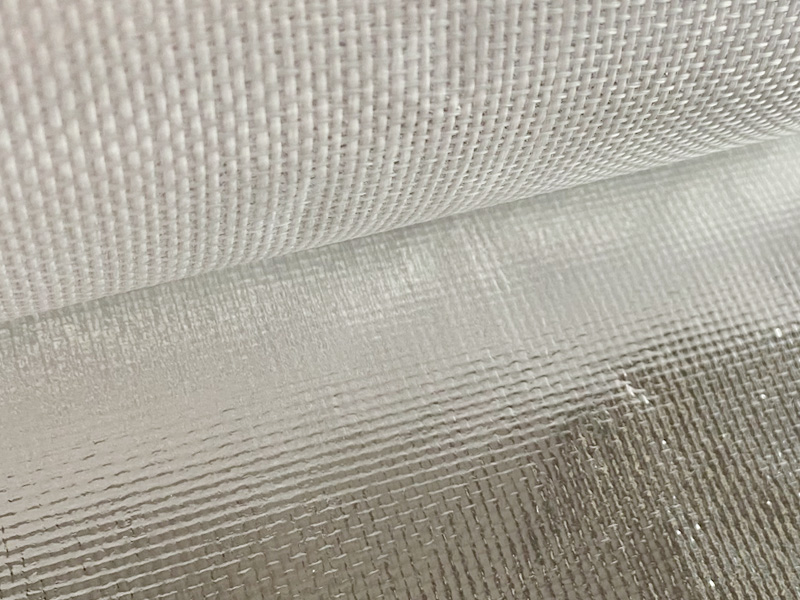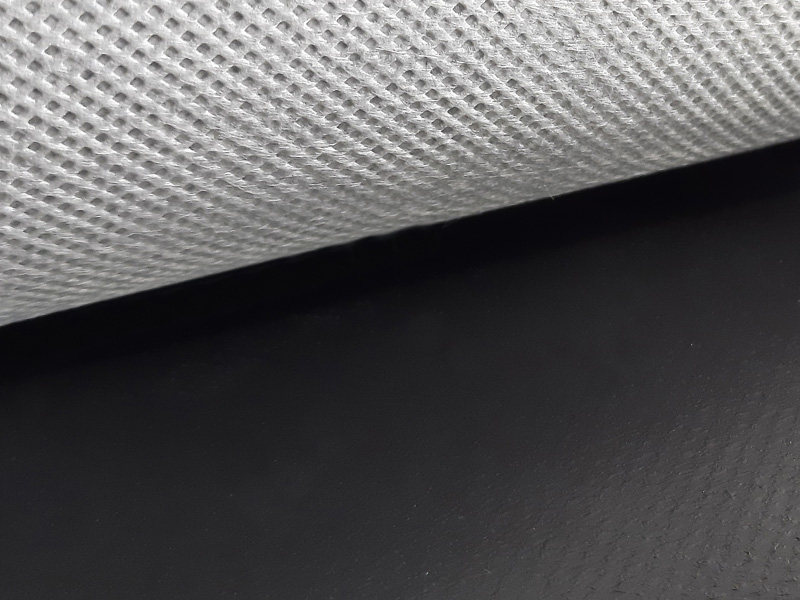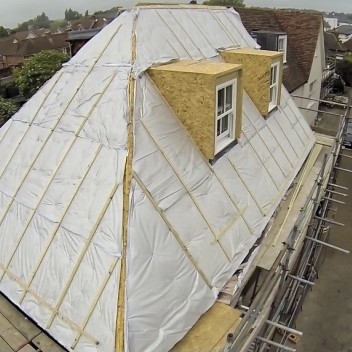
A roofing underlay, insulating breather membrane Actis Boost ‘R Hybrid, has passed a specialised BRE test aimed at helping British builders construct roofs which can withstand increasingly windy conditions.
The test for wind uplift resistance is part of a new labelling system brought in as part of the radically updated building standard BS5534 which was introduced in February this year. NHBC sites have had to comply with the revised version, which now addresses every component of the construction of a standard roof, since the beginning of July.
The labelling will ensure that builders can easily identify the correct underlay for the geographical region in which they are working. This is particularly relevant for roofing contractors in Scotland, the North of England and ultra windy parts of the UK.
The test, carried under controlled conditions at the BRE HQ, concluded that Actis Boost ‘R Hybrid is suitable for use across all five regions, or zones of the UK identified under the new system, from the most northerly islands of Scotland to the most southerly point of England.
Not all underlays can cope with the windier conditions of Scotland or the far North of England.
The test was introduced in the light of evidence showing wind conditions are worsening, and the criteria outlined on the label will ensure builders can minimise the ‘ballooning effect’ which sees the underlay force tiles and slates off the roof in high winds. Underlay is not allowed to balloon more than 35mm.
The new labelling system has been welcomed by the NFRC and will clearly identify in which zones each type of underlay can be used and how it is to be installed.
The Actis Boost ‘R Hybrid wind uplift resistance test saw the product trialled under strict laboratory conditions and it has been certified for general use across the whole of the UK including the windiest zones.
Tests concluded that the wind uplift pressure achieved by Boost ‘R Hybrid was way more effective than that required under the revised BS standard – with an average of 3054Pa when used with taped lap alone and 5748Pa with the addition of a 38mm counter batten.
The BS5534:2014 slating and tiling for pitched roofs and vertical cladding code of practice calls for a minimum wind uplift resistance of 1600 Pa for a 345mm batten gauged roof covering, rising to 2350Pa for roofs with no ceiling and a permanent dominant opening.