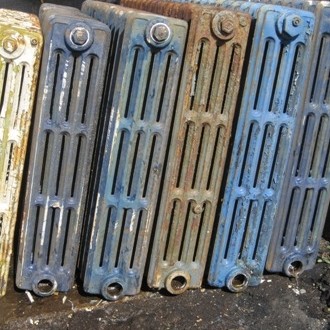
There could be as many as 24.5 million inefficient radiators that need replacing in the UK, according to Nick Whitwell, managing director of Quinn Radiators, who is urging installers to take advantage of this up-selling opportunity when replacing boilers or carrying out heating maintenance work.
Recent research carried out by the Manufacturers’ Association of Radiators and Convectors (MARC) indicated that 20 per cent of home owners still have radiators in their homes which do not have convectors.
MARC estimates that this suggests there are 4.9 million homes using finless products.
Nick Whitwell explained: “If you take a conservative estimate that each of the 4.9 million homes has five radiators, then the MARC research suggests that there could be as many as 24.5 million old steel panel radiators that need replacing, which would help to significantly improve the energy efficiency of these homes.
"This represents a real opportunity for installers who can educate consumers about the energy saving benefits of new radiators.”
Advances in welding techniques saw the introduction of convector fins to radiators back in the 1980s. Now most modern radiators have fins on the back, or between the panels if it is a double. This has enabled smaller radiators to be used as the fins vastly increase the surface area available for giving off heat.
Whitwell continued: “Just because the Green Deal focuses on other measures, such as boilers, doesn’t mean installers can’t recommend other energy saving products for the home owner to pay for. Modern radiators with convectors simply radiate more heat than their older finless counterparts and provide a much better heat output, reducing the amount of energy that is needed to keep the house at the right temperature.
“Many consumers won’t realise that having older, less efficient radiators means the boiler has to work harder to get the rooms up to the required temperature. This means that the new boiler won’t be working as efficiently as it could be and therefore won’t be meeting its full cost saving potential.
"Replacing radiators on their own can also be an easier sell because the cost is much cheaper than other energy efficiency measures and the financial payback is much quicker.”