Details of spending plans for the year 2015 to 2016 have been announced by the Chancellor, including an increase in capital spending by £3bn per year.
The Spending Round is the next stage in the government’s plan to move from rescue to recovery. That’s the message from Chancellor of the Exchequer George Osborne as he delivered his Spending Round speech on Wednesday 26 June, setting out departmental budgets for the financial year 2015 to 2016.
The Chancellor announced that £11.5bn of savings would be found from government budgets in order to continue along Britain’s path to deficit reduction.
This will allow a further £3bn per year to be spent on capital from the year 2015 to 2016, boosting investment in infrastructure and supporting economic growth at the same time as ensuring a sustained reduction in the deficit.
The Chief Secretary to the Treasury Danny Alexander will set out more on government capital plans the day after Spending Round.
Spending on health, schools and overseas aid will continue to be protected - maintaining vital public services that are relied on, and supporting the poorest overseas.
The Chancellor also announced the government will deliver over £5 billion further efficiency savings in the year 2015 to 2016 through stopping wasteful expenditure, transforming transactional and corporate services such as HR administration and IT support, and reducing the running costs of government.
As well as this, building on the announcements made in Spending Review 2010, Chancellor George Osborne set out in his speech how the government will continue its programme of public service reform over the remainder of the Parliament, encouraging public services in local areas to work more closely together to cut out duplication and invest in reducing demand for costly services.
The Chancellor announced that the government will put £3.8 billion into a pooled budget for health and social care in order to deliver better services to older and disabled people, keeping them healthy so out of hospital; invest £200 million to extend the Troubled Families programme and change the way that local authorities, health, education and criminal justice services work with a further 400,000 vulnerable families; and launch an action plan to make the criminal justice system work together more effectively.
The government’s significant reforms to the welfare system since 2010 will also put welfare spending on a more sustainable footing, reduce pressure on public services and ensure that the system makes work pay, the Chancellor added.
There are also new measures announced by the Chancellor in the Spending Round to support people to move into work by increasing the requirements placed on people claiming benefits. For example, all claimants will have to prepare for work and search for jobs right from the start of their claim.
As well as this, it was announced that the government will introduce a cap on welfare spending for the first time, to ensure that welfare remains affordable in the future.
The Chancellor said that the government remains committed to ensuring the vulnerable are looked after, and everyone makes a fair contribution in tax - and takes only their fair share in benefits.
In 2010, one pound in every four the government spent was borrowed.
Since then, good progress has been made: more than a million new jobs have been created by British businesses, and the amount the government has to borrow each year – the deficit – is down by one third.
This is part of the government’s economic plan to keep mortgage rates low for families and fix the banks, to deal with our debts, and to equip Britain to succeed in the global race.
Prior to the announcement, recently released Glenigan and ONS data shows that the flow of new infrastructure projects has begun to slow. The ONS reported that new infrastructure orders in the first quarter of the year were 50% below the level seen during the final quarter of last year.
However, despite the decline in the first quarter, the volume of infrastructure orders is still closer to the peak seen in 2010 than in many periods over the preceding 30 years.
Indeed the infrastructure sector has fared relatively well over the last five years, supported by increased rail investment and private sector investment by the regulated utilities and energy sector. In contrast public sector non-residential activity has been fallen away sharply since 2010 with new orders running close to all-time lows.
Much of the recent fretting over infrastructure stems from the fact that some very large high profile schemes, such as the Hinkley Point nuclear power station, are failing to get the go ahead. While such projects can support long term economic growth, their immediate contribution to the economy and industry workload is more muted.
The long timescales and the high capital intensity of such projects can mean that their effect on employment and local economies is far more limited than the equivalent spending on a greater number of less complex projects would be.
The latest Glenigan analysis has revealed a substantial £114 billion pipeline of central Government civil engineering and building projects.
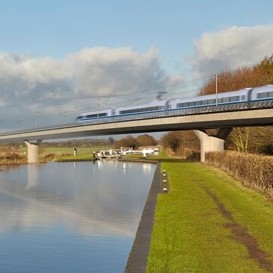
Whilst this includes important long term projects, such as HS2, the analysis also identified a host of both infrastructure and building projects that could potentially provide a major lift to construction activity over the next two years if delivered as scheduled.